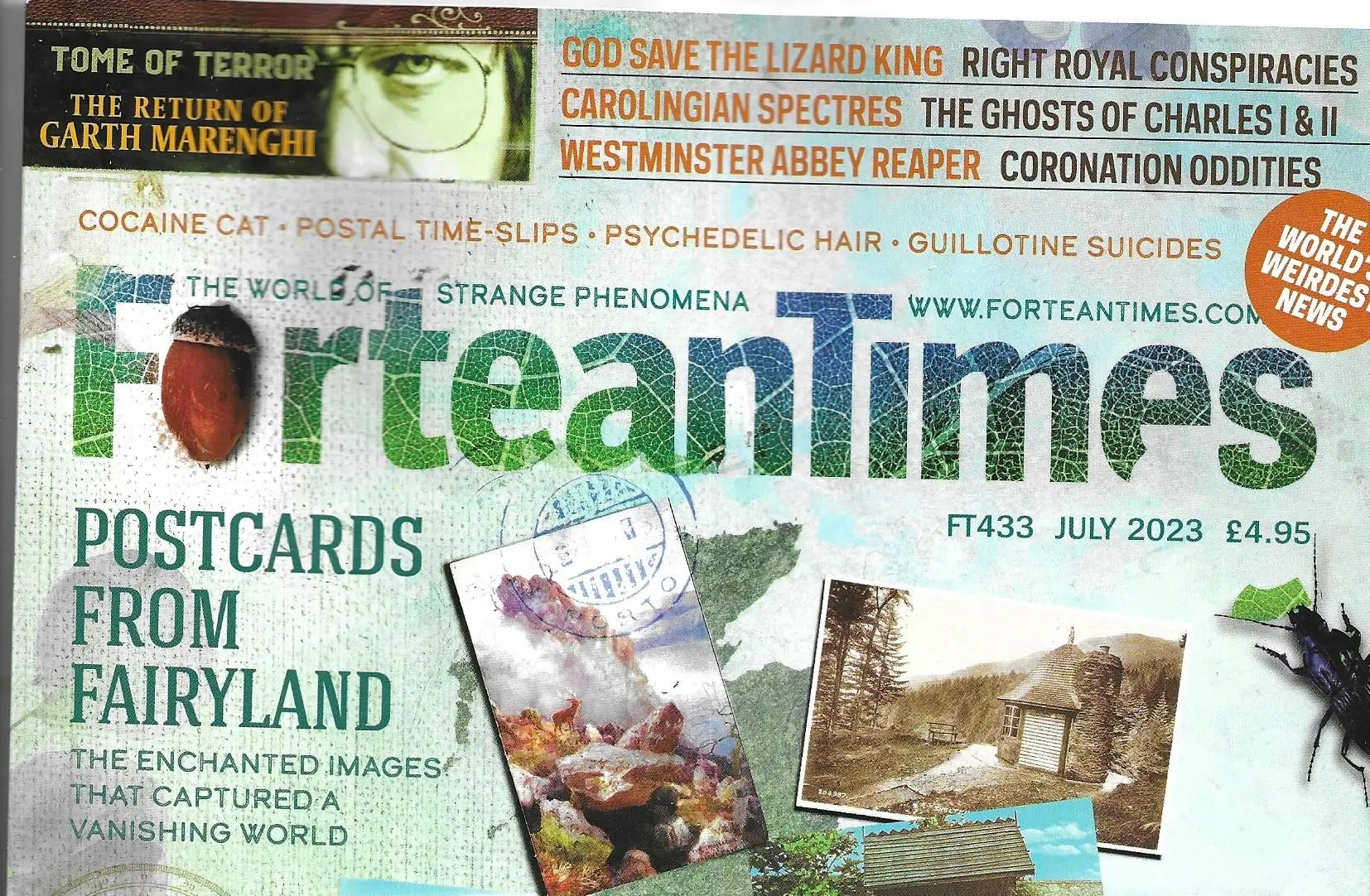
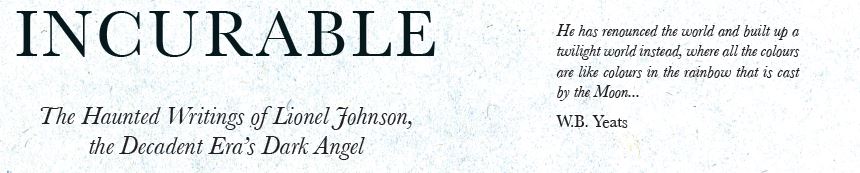
I’ve been writing for 30 odd years now and like all creative people my work has evolved over time. I would never have imagined after decades as a music journalist and biographer that two articles of mine would be featured on the cover of ‘Fortean Times.’ The first pre-empted the publication of ‘Incurable : The Haunted Writings of Lionel Johnson, the Decadent Era’s Dark Angel’ in 2018 via Strange Attractor Press. The winsome Johnson had largely been forgotten despite having been a pivotal figure of the Decadent Era. As well as being a driving force in the Celtic Revival, spearheaded by W.B Yeats, who held the poet in high regard, Lionel also introduced his special friend, Lord Alfred Douglas to Oscar Wilde enabling the greatest scandal of the ‘Fin de Siecle.’ As ethereal as it’s possible to be without being invisible, Johnson had slipped through the pages of time which made him deeply appealing. (Those who enjoy universal acclaim tend to be without wit or wonder, at least from my perspective.) Strange Attractor Press, one of the most astute publishers in the UK for discovering and retrieving lost or esoteric culture picked up on the Lionel project. (My thanks to author Mark Valentine for making the initial introduction) Weeks of feverishly typing out a selection of Johnson’s poetry and essays followed, rounded off with a lengthy biographical introduction. Virtually a life-long dipsomaniac, poor Lionel had declared himself ‘incurable’ to W.B Yeats, who had expressed concern over the poet’s drinking. ‘Incurable – The Haunted Writings of Lionel Johnson, the Decadent Era’s Dark Angel’ received critical acclaim and is due for a reissue later this year, on kindle and in print. Lionel Johnson might not seem an obvious subject for a magazine like Fortean Times but like a tale written by Poe, he was haunted by a strange avian entity not long before his death. The haunting became one of the last great unsolved mysteries of the Victorian age and Lionel the obscure became a Fortean Times cover star! Named after Charles Forte, ‘Forteana’ is the study of anomalies; ghosts, fairies, flying saucers, big foot etc and the only magazine that I both read and contribute to these days. In the same way that music had once seemed boundless and free so the subversive nature of Forteana gives it more latitude in a world ever more mundane. Earlier this year FT also included an essay of mine on the uncanny aspects of Oscar Wilde’s life, to coincide with a book of essays published via Trapart entitled ‘Dancing With Salome’ but I digress ever so slightly because life never runs on straight lines.
For three years I had struggled with finding a story-line for a novel. It seemed like all the good ideas had been taken, not just in the present but in the past as well. My imagination and notebook was crammed with opening paragraphs and insubstantial characters. Plots were circled and revised, whilst pen portraits of shadow people refused to hear my literary entreaties. The best thing to do when words are being skittish is to take a break. Every few years I reread my favourite book, Arthur Machen’s ‘The Hill of Dreams’ (pub. 1907) Each time I picked it up, I would find something new in Machen’s enchanting, decadent prose, immersing myself in what the author had described as ‘Impressions of wonder and awe and mystery.’ Again I must doff my cap at David Tibet, singer, artist and visionary, who had the foresight to introduce me to Machen’s work. It was a pivotal moment in how I thought about writing, Machen unlocking the door to a sense of lambent, impressionistic craftsmanship that I longed to somehow incorporate in my own work. ‘The Hill of Dreams’ features a young dreamy boy, Lucian, who inspired by the pagan countryside where he grew up, moves to London to fulfil his dream of getting a novel published. Lucian’s hypnotic dissolution in the labyrinthine city has an unearthly compulsion as he loses himself in a series of visions induced by near starvation and Laudanum (opium in alcohol) although Machen is too good a writer to point out the obvious. Tragic Lucian perishes before he can finish ‘the great work’ leaving behind a wild flower thicket of literary flights of fancy, glimmerings of a strange and ineffable radiance which he can sense but not describe. He dies with the pieces of the manuscript strewn about his desk, described by Machen as ‘illegible hopeless scribblings; only here and there was it possible to read a word.’

Had no one pondered the fate of Lucian’s manuscript? All we know from ‘The Hill of Dreams’ is that ill-destined author had left his few worldly goods to his landlady. The idea was to consume me until I began writing ‘The Greenwood Faun’ which opens with the discovery of Lucian’s lost manuscript. Thus commences a gay, ghostly love story set in Victorian London against a decadent backdrop and a conjuration of Pan. This then was the novel which found me rather than it being the other way around. ‘The Greenwood Faun’ was written in 6 months, the length of time that Lucian Taylor had spent on his manuscript. It was subsequently issued as a deluxe limited edition by the independent fantasy publisher, Egaeus Press, whose books are also works of art, harking back to Victorian annuals. I cried when I first saw a copy of ‘The Greenwood Faun’ it was so very beautifully produced, with gold edging and exquisite art nouveau end papers.
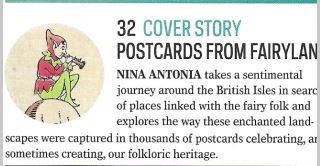
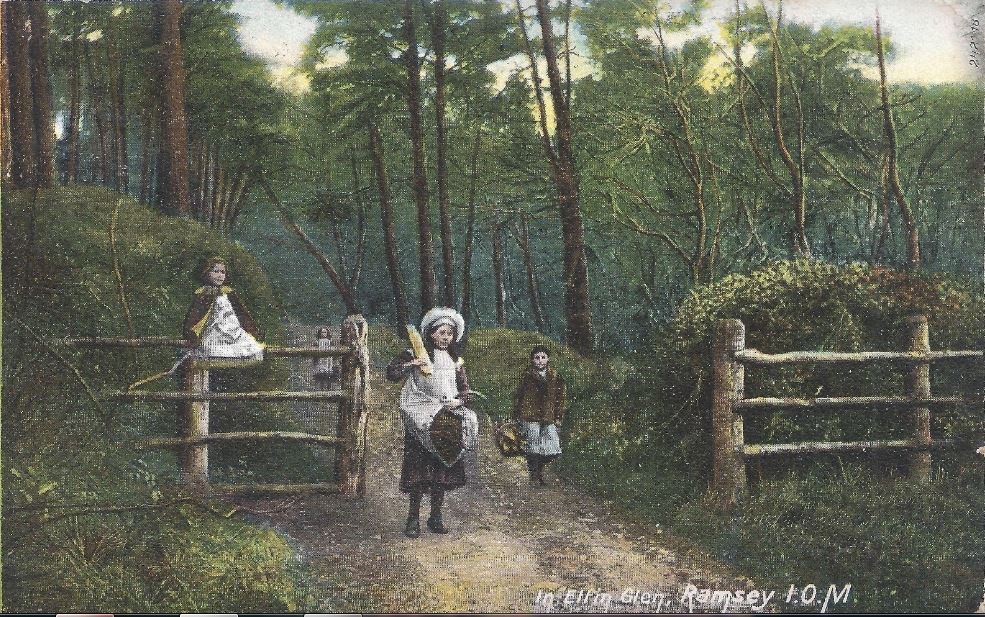
Inspiration is surely a magical process, although it doesn’t come from nowhere and is the hardest thing to define. Irish folklore tells of the ‘Lianan Sidhe’ a beautiful fairy-muse who imbues artists, musicians and authors with the treasure of creativity but in return, they must pay with their lives. When the fires of rock and roll dimmed after Johnny’s death, a whole universe vanished, like Atlantis. It took a while to find my bearings but books had always proved a solace and so I returned to the fantastical and phantasmagorical subjects that had always entranced me. I’m not certain when I purchased my first ‘fairy’ postcard but I do remember that it was a hand-painted image of Lough Fee, in Ireland at twilight. In that picture, the ineffable quality inherent in Machen’s writing had transferred itself into a vision, albeit through the medium of postcards. Five years later, I had amassed quite a collection of mainly Victorian postcards featuring Fairy Glens, Fairy Steps, Fairy Chapels, Hob Holes and Pixie Parlours. Most of them had folklore attached but in capturing those fading bygone postcards a story surfaced of how beauty spots had been stolen from the public by private concerns and the enchantment of fairy inherent in wild nature had been devoured by commercial interest. ‘Postcards From Fairyland’ made the front cover of June 2023’s ‘Fortean Times.’ It was delightful to see some of the postcards that I had most treasured featured in the magazine. Might not these be the landscape of ‘The Hill of Dreams’?

 Nina Antonia