How could I not wish to contribute to Hellebore’s first excursion into the realm of fiction? The magazine continues the tradition of fantastical subject matters from folklore to the supernatural that originated from stories told by candlelight before literacy was widespread. Later these strands, be they of faerie, witchery or superstition were to influence writers such as MR James, Arthur Machen, E. Nesbit, Algernon Blackwood, Edith Wharton and EF Benson. It is without embarrassment that I confess to being old fashioned when it comes to horror/fantasy whether in books or film. Roger Corman’s cinematic vehicles for Vincent Price and Hammer films offer a rich banquet that I’ve never really left, bar one or two exceptions. The first person to introduce me to this dark vein of culture was my grandmother, who talked fondly of Edgar Allan Poe, which if you’d have met her would have seemed extraordinarily out of character. Uncanny tales should always have good manners, at least in my book. Splatter and gore are the slaughterhouses of imagination. As this is my blog, I’m allowed to digress…..
Hellebore’s foray into publishing a literary anthology grew from the tendrils of their guide to ‘Occult Britain and Northern Ireland’ which was issued to acclaim in December 2021. The dark months of the year seem to lean towards such things but it was in the spring of 2025 when I was first contacted by editor Maria J Perez Cuervo, who also founded Hellebore to submit a story based on one of the places in the original ‘Guide’. London’s Highgate Cemetery is not an obscure location but it is one of the most atmospheric that the city has to offer, the poetic equal of Pere – Lachaise in Paris. I had never written about vampires before but the cemetery and more specifically, Swain’s Lane that runs adjacent to it had left an uneasy if memorable impression on me. Seen in daylight, it is a very pretty narrow road, a fence allowing glimpses of the graves and foliage that runs alongside it. The road twists and turns leaving blind-spots but it is easy enough to walk down. Nevertheless, Swain’s Lane left me feeling apprehensive. The fact that it was subtly, even politely creepy only served to make it more unsettling. Despite its beautiful gloom, the cemetery itself felt far less off kilter.
What makes ‘The Highgate Vampire’ particularly compelling is that it is relatively recent and allegedly real. The majority of British vampires tend to be of antiquity, aside from the fiend of Croglin Grange who was allegedly active between 1875-6. Opinions vary as to whether the Croglin Grange vampire was fantasy, folklore or fact. In the case of the ‘Highgate Vampire’ however, there were several eyewitness accounts, the majority of which were reported in the Hampstead and Highgate Express, including one from a Mr. R Docherty who claimed to have seen ‘a tall man in a hat who walks across Swain’s Lane….and just disappears though a wall into the Cemetery.’ (February 13th, 1970) The presence of the supernatural, decades or even centuries later can leave a residual essence like invisible finger prints on a location. That sense of psychic trespass on Swain’s Lane was to stay with me for over a decade until I heard from Maria and then I knew it was time if not to lay it to rest to at least give it an unearthly resonance.
The book itself is a dark treasure, produced to the high quality of design associated with Hellebore magazine, whilst the stories bristle with magic and menace. Contributors include Ramsey Campbell, Steve Duffy, Helen Grant, Verity Holloway, Eoin Murphy, Reggie Oliver, Steve Toase and Ally Wilkes. It’s a pleasure to be included in such a strong line-up of authors, capable of capturing the uncanny evoked by certain locales. For further info, please go to www.helleborebooks.com
Before the internet, newspapers and magazines used to feature small adverts that proclaimed ‘Become a Published Author.’ These ads were to be found nestled in the section before the obituaries but after the lonely hearts and side by side with fortune tellers and Mediums. There was something murky about the ‘Published Author’ proposition as an ‘agency’ fee was required. Paying to get your work in print was known as ‘vanity publishing’ and appealed to the naïve, credulous and inexperienced. No legitimate publishing house would ever expect an author to pay to see their work in print. Now the age of the internet is upon us, those little adverts have vanished into the ether to be replaced by a far more sophisticated racket. Kindle has opened the floodgates to faux agents, faux tutors, faux journalists and faux promotion as well as faux publishers who all for a fee will enable your literary ambitions to be realized. Fussy formulas for writing books are also widespread and largely serve to hinder the creative process. There seems to be no direct source to these new rules, rather they exist and are followed. I noticed a young woman appealing to the #writingcommunity for advice as she couldn’t plot mood changes without upsetting the plot’s progress. The problem with adhering to a ‘formula’ is that the writer’s output will be process driven and lacking originality. Then there is the fallacy of ‘Beta Readers’ – the literary novice is advised to give out their transcript to family and friends to read for their feedback but these aren’t professionals and too many opinions are likely to send the project off course. The aspiring writer must develop an inner voice. None of the literary greats needed to follow other people’s directions, the joy of their craft is in their individuality and their unique expression. Their work still rings true decades long after they first put pen to paper or pounded the keys of their typewriter. Can you imagine Virginia Woolf, Willa Cather, Charles Dickens, Ernest Hemingway, William Burroughs, Jane Austen, Angela Carter, Edgar Allan Poe, Oscar Wilde and other literary luminaries meekly submitting to writing templates?
There used to be a saying: ‘Everyone has got a book in them’ but not everyone has a good book in them. Playing upon would-be author’s ambitions for a price is unethical, although this goes against the grain of modern thinking where encouragement rather than discernment is the focus, which makes people wide open to advantage takers. Of course everyone wants to find the winning lottery ticket and so there is the belief that self-publication might bring the author to the attention of the literary establishment. It has been known to happen now and again. The authors who do best out of self-publishing are the ones who are already well known. If you want to be an author, avoid formulas and run free with your ideas. It is a very difficult path to tread and few get rich but if writing is your vocation then you must try. Anyone who tells you that writing is a career is sorely mistaken. Writing is a craft, an art, a calling from deep within for self-expression. Of course, education helps but the need to fashion something out of nothingness and the ability to create an original work cannot be taught.
Over a decade ago, I began interviewing some of the people who had known Nico whilst she was residing and performing in Manchester, in the latter part of her life, with the hope that I could get a publishing deal. This alas was not to be but the material I collected is more than worthy of sharing. This particular conversation with Barbara Wilkin, who was Nico’s friend and driver, is very poignant and revealing. Nico was enigmatic but without tarnishing her mythology, Barbara Wilkin’s thoughtful account goes some way to explaining it.
In 2024, Hann, the daughter of Barbara Wilkin, released a delightful single entitled ‘My Mum was Nico’s Driver.’
Barbara Wilkin Interview
N: How did you meet Nico?
B: It was in 1982, at a concert in Holland in Apeldoorn. I went with 2 journalist friends who wanted to interview Nico. As it turned out, they never found her but I did. It was a day that changed my life because I wouldn’t have ended up in Manchester if I hadn’t gone to the gig. At the time I was learning to play the drums and I watched Toby (Phillip Toby Tomanov) the drummer throughout the concert, so he came over afterwards and said ‘Why did you look at me that way? I started dropping my drum sticks’. I ended up back- stage; I remember the band, The Blue Orchids, were sitting around a table and at the head of it was Nico. After being introduced, I took a seat. The moment I sat down I felt Nico’s eyes upon me. I found this unsettling and tried to avoid looking back, but risking a few brief glimpses just to be sure. Nico kept looking and she held my stare and looked deeply into my eyes and said in German (translates) ‘You don’t have to be afraid of me; I’m only an old woman.’ I was flabbergasted that she had caught on that I was German. She was scary to be honest, she had scary eyes. That was our introduction. She took an interest in me. When I first came to England, it was to be with Toby the drummer, we were going out. Later when I split up with him, I was working with Alan Wise and became their driver. There were people who didn’t want to travel with Alan or Nico so I drove them. At one point we had two mini-buses going around Europe. It was quite a sexist environment with all these Mancunian guys. When Alan said I should drive and work for him there were certain guys who didn’t like having a girl on tour but Nico and I were the only girls. Sometimes there was a little bit of rivalry over who should do the driving as Nico had been the driver for the Velvet Underground. She kept insisting on how great a driver she was. She’d sit behind me and dig her knees into my back! At one point when were crossing the Alps I stopped on a slope and said ‘okay’ and gave her the car keys. Everyone else deserted us, so it was just Alan and I but when Nico tried to drive, the car kept stalling. She was really upset that she hadn’t been able to pull it off.
N: Nico’s enigma?
B: She didn’t want to be Mainstream. She told me that Patti Smith had given her a pump organ, the one she came to Manchester with had been given to her by Patti Smith. (after Nico’s harmonium had been stolen) I liked Nico for the heavy German stuff that is what I heard first, rather than the Velvet Underground.
N: I’m wondering if there was something about herself that she didn’t understand
B: That might well be the case. If you look at Nico and how she grew up, her mum was mad, she didn’t really know her father. She told me things about him, he looked like Gregory Peck, he was really handsome but he was homosexual which was why the Nazi’s killed him in a concentration camp. I don’t know the historical details, what is written on Wikipedia might not be right. Allegedly his family rejected him (like Ari, like Nico? N) Nico talked about that a lot. We went to see her father’s family in Cologne. They were wealthy people who owned a brewery. She should have got some kind of inheritance from them. In 1985 or 6 we were in Cologne, Nico had a gig there, she pulled out an address and said ‘Let’s go and see these people’ so we went and rang the doorbell. A woman opened the door. When Nico said who she was, the woman slammed the door on her. That was as far as we got. She was upset about it and it wasn’t just for her, she was thinking of Ari as well.
N: It seems that she did try to look out for Ari
B: She told me once that she’d never been as well organised as she had been when she was pregnant with Ari, she was responsible at that time.
N: The majority of the men in Nico’s life seemed to have been quite unsubstantial and ephemeral figures. She never got to bond with her ill-fated father then there were liaisons with Brian Jones, Jim Morrison, Alain Delon…….
B: Men adored her for her looks when she was younger. She talked about men in different ways, she adored Jim Morrison, never said a bad word about him. Alain Delon she had no good words for, she said that he was violent to her. It’s so obvious when you see Ari where his genes came from, but I think she felt upset and betrayed by Delon.
N: The change from light to darkness, an intellectual decision to be taken more seriously as an artist?
B: It might have been a combination of both and also she had red hair when she was with Phillip Garrell, he may have had an influence. She claimed not to have taken drugs before then but she had taken speed. She said that when she was a model she had always been starving, surviving on an apple for breakfast, an egg for lunch. She also claimed that she only had to look at food to gain weight, she was a big woman, and she didn’t eat much at all. Her periods stopped. But why did she change? How old was she? At 16 she became a full time model. I met her aunt at the funeral so she had so many things to say, she cared. I don’t know about her mother, I don’t think she had proper mothering from her own mother. I think her mother was a tortured person, she spent time in a mental institution, she wasn’t around when Nico was a child, and it was her aunt who was the stabilising factor. Her father wasn’t there, Nico told me about how she would hide in the cellar when Berlin was being bombed, she would have been 6 or 7. Obviously she missed out on schooling, she got into modelling early.
N: Where were you based when you were in the UK?
B: Nico stayed in a few place. We lived in Brixton for 7 months; it was a 3 bed flat. Effra Road. She liked to have me around, she’d always ask, when will you be back? We’d watch television together, go to the pub, she was always trying to set me up with people, I was always surprised when she took an interest in worldly things. She would sit back and observe people. She wasn’t isolated in that way. I think she’d given up on love, there were a few guys, I mean she was 42 when I met her, there was a young guy around but she’d lost interest. She didn’t relate well to a lot of women, she related better to males but even then she was alienated by how men treated her, first when she was beautiful, then with the Velvets, when she was a superstar. There would have been a lot of situations for her to deal with.
N: At least by the time she got to Manchester, Alan Wise set up a safe base that she could retire to
B: Alan helped to stabilise her situation. There were drugs here but later he got her onto methadone so she didn’t have the fear of not having any gear. Some of the gigs that Nico did, especially when she was playing her own stuff, some of the audience would be disinterested, they’d talk, I’d get quite angry about it, all they wanted to hear was the Velvet Underground songs, it must have been hard for her, at times she was quite unwell. Also Alan provided her with friendship, even though she was pretty horrible to him at times, she’d kick him and shout at him say that he hadn’t paid her properly but he did what he could, he’d pay the musicians, make sure that Nico had money even if he went without himself. I think she appreciated that, I think she knew. But then again she was stuck in Manchester, and how realistic was that for getting more gigs? She became more settled and thinking what she wanted for herself. She was a very modest person. She didn’t expect much and she didn’t ask for much. I remember once saying to her ‘Nico, all you have is that harmonium and a black bag of clothes’. She said ‘But I like it that way’ ‘Why?’ Because if you have a lot you’re not really free.’ But she wasn’t free from the drugs, not for a while, that was always a worry for her.
N: Nico was quite a rootless being which is reflected in some of her songs. She seems to have been permanently in exile, mentally.
B: She was quite a lonely person. I really like one cover she did. It was a cover of a Hildegard Knef song ‘Lied Vom Einsamen Medchen’ ‘The Song of The Lonely Girl’. The lyrics are about a girl who has a longing and she is lonely and her hair is so blonde, her heart is of stone and her lips are as red as blood. Nico sang it very well. I think it was symbolic of her own situation. On one side, her whole world was a fairy story, celebrities, stars, it’s a place where nobody is themselves, they are images, it’s about how they want to be seen and how they present themselves then she went to the other extremes. She created her shadow side. She never fitted into the so called normal world, she created her own world. She was proud that on her passport it said ‘Ohne Festen Wohnsitz’ which means without a permanent residency. And her life was like that, she didn’t fit in and she knew that.
B: I spoke to my sister yesterday, who was also friends with Nico. My sister told me that in Cologne they decided to name a street after Nico, it was going to be called Christa Paffgen street and then someone threw a spanner in the works by going we can’t call a street after her because she was a drug addict. It was on a television programme. My sister wrote in saying why was this allowed to happen? So many people who don’t really fit into society at the time when they were alive and now streets are being named after them, why not Nico? It would be a nice thing in Cologne to remember her by. I read some Dylan Thomas today can you imagine him without cigarettes and alcohol?
Nico’s Death. (18th July, 1988)
I was very shocked when she died; I always thought she’d outlive all of us. Heroin alone doesn’t kill you and at that time she was getting more positive, rebonding with Ari, and spending time with him. Whenever Ari was going to join us for a tour, she would be so excited. She’d knock at my door ‘Ari’s coming’. She cared as much as she could. She had wanted to look after him in earlier years but circumstances hadn’t allowed it because she was Nico. Maybe it was better for Ari in some ways that he had been taken away from her but anyway, it is terrible to see Ari now and what has happened to him. He had a stroke, a brain haemorrhage, he had the same thing at the same age, 49, as Nico but he was fortunate that he was on the metro. I saw him for the first time since his mother was alive, two weeks ago; he is paralysed now and needs to take a lot of medication. I think if Nico had been found earlier she might have survived but there may have been some physical damage, like Ari. It is tragic. Is there something running in some families, some tragedy passed on to different generations. ? I don’t know what it is. It has been an honour to have known Nico, she changed my life. I got to tour for 7 years. When I was older I met a musician, we became normal, held down normal family jobs but life with Nico was an adventure and it was a privilege to have had those experiences.
I can’t remember how many years ago this appeared as sleeve notes for an Easy Action MC5 release, possibly 15 or even 20 years ago. However, great rock n’ roll never dies, it leaves an electric scar on the present and the music survives, just like the memories. I was fortunate to meet and interview Wayne Kramer several times. As well as being a powerhouse guitarist, he was a sincere well- meaning man who had managed to leave the drug life behind and start afresh. No easy task as the death of the MC5 must have been hard to recover from. The intensity of the band fuelled by political dissent made them an incendiary proposition . Sadly, the U.S is in as much turmoil now as it was in the 1960’s. You can only kick down the doors of a decade once, but the MC5 did. The effect was shattering.
MC5 Liners
As photogenic as Che Guevara, The MC5 could be construed as pin ups for the American counter culture. Although the dream image of the U.S.A in the late 1960’s is often perceived as a time of love and peace when even Hell’s Angels were benevolent, the flipside of the coin was devastating: Vietnam, the assassination of Martin Luther King, the Kent State University shootings and the Tate/LaBianca murders to mention but a few of the prevailing horrors. Perhaps things were different in San Francisco. In The MC5’s home town of Detroit, it wasn’t the gentle scent of incense wafting on the breeze that assailed the senses, but the acrid smell of neighbourhoods on fire during race riots. The best music usually comes from the toughest (or poorest) places. Like salt in the soul something rubs off. New York spawned the Velvet Underground and the New York Dolls. Mississippi sired Muddy Waters and Elvis Presley, and from Detroit came The Stooges and the MC5. Many years have passed since Vice President Spiro Agnew then serving under Richard Nixon considered the MC5 a genuine threat to America’s youth. It was Spiro Agnew who also noted in his 1968 election speech “If you’ve seen one city slum, you’ve seen them all.” It didn’t matter much to him whose home went up in flames if the inhabitants were poor, black or anti-establishment but it did to The MC5. As guitarist Wayne Kramer commented: “We were very frustrated with the slow pace of change, and what we viewed as an intolerable situation, between racism, police oppression, the war in Vietnam, outmoded drug laws. We took the lead from the Black Panther Party, in that they were the vanguard and voice for their community. We felt that we could be the vanguard and the voice for our community.” As a result of their political commitment, the band found them selves on the receiving end of police harassment and surveillance, were busted and arrested whilst their manager John Sinclair became a marijuana martyr and hounded by the authorities. John Lennon even sang about Sinclair’s plight, sentiments that the former Beatle soon quietened lest he not be allowed to live in the U.S. By the time Lennon had forsaken his radical rhetoric and was residing in New York, The MC5 were history. Aside from a few loyal supporters in what remained of the underground, the demise of the MC5 made barely a dint in the rock universe. Wayne Kramer sets the scene: “New Year’s Eve, 1972 was our last performance, at the Grande Ballroom, the scene of some of our greatest successes. It was an ironic ending that the last performance should be there – playing for $500, stoned on heroin, with maybe 500 kids in the audience. All the memories of it are in black-and-white, bad, bad, bad. The centre never holds. What was happening in ‘68/69, this great promise of the revolution, that was never going to hold anyway. As time goes on things fragment.”
In the intervening years, the MC5 became cultural exiles. Sure, there were strongholds of true believers, Zigzag magazine published John Sinclair’s jail cell penned memoirs of the band, the former 5 singer Rob Tyner cut a track with UK rockers Eddie & The Hot Rods called ‘Till The Night Is Gone’ and briefly reminded England that Punks weren’t the sole heirs of misrule; journalist Mick Farren waged a campaign to free Wayne Kramer from prison whilst the guitarist languished in Lexington, Kentucky on drugs charges. After his release, Kramer formed the short lived Gang War, with Johnny Thunders, who’d always cited the 5 as an influence. However, even as recently as 10 years ago, the MC5 were still a less than tangible presence. The sight of Jennifer Aniston, former wife of Brad Pitt, sporting an MC5 tee-shirt on the opening credits of the anodyne ‘Friends’ would have been previously unthinkable. Reappraisal seems to have a shelf life of 30 years. By then the mainstream are finally able to process the radical and innovative. Welcome back the MC5 – all is forgiven. Along with The Stooges and the New York Dolls, the MC5 are now hailed as the founding fathers of contemporary rock. In a largely synthetic music world, credibility which the MC5 possessed in abundance is everything. Yet however well deserved the current reassessment of the MC5 is some folks have gotten desperately reverential. Respect is one thing, but reverence should be saved for God not rock and roll, which was meant to be fun, sexy and subversive. Let us not forget that though the MC5 created their own political program under the banner of the White Panthers, the main thrust of their manifesto was ‘Dope, rock & roll and fucking in the streets.’ It must have been one hell of a party. They were as hip as Che, poster boys for the revolution, delinquents with a taste for spangly clothes, a musical powerhouse of testosterone and testimonials who originally met through that most dangerous of institutions, school. Like every band in its formative stages there were early line up changes, as Wayne Kramer explains: “Fred Smith and I started playing guitars together, must have been in the tenth grade – in ’64 we played in a lot of rival bands. Then we ended up in the same band together and we met Rob Tyner and Dennis Thompson and Michael Davis and we all moved away from home together. We were all getting to be 16, 17. We moved to the beatnik neighbourhood, the Detroit version of Notting Hill Gate.” Drawing on a collective spectrum of influences that included Chuck Berry, James Brown, Jimi Hendrix, The Who, The Yardbirds, The Rolling Stones and Them, the band had already honed their gritty nascent sound during rehearsals in Mrs Kramer’s basement. From the outset, the 5’s bad ass musical identity was singularly potent, riff hungry teen wolves or ‘hormonally overdosed smarty-pants’d punks’ as Kramer once succinctly described them. If their roots were forged in Garage and Rhythm and Blues, the punks got Jazz/political consciousness in the second phase of their development, whilst living in Warren Forest and hanging out at the local Artist’s Workshop which was nominally presided over by poet and music journalist John Sinclair, although at the time he was serving a 6 month prison sentence for marijuana possession. To celebrate Sinclair’s eventual release from Detroit’s House Of Correction, his wife Leni organised The Festival Of The People, and asked the MC5 to play. As John Sinclair explains, it was an auspicious event: “I met the band briefly the day I got out of jail in 1966 but I didn’t work with them for a year, I just wanted to hear them, then I became friends with Rob Tyner, best friends. He was a genius who wanted to have a rock and roll band and try some ideas out that were different, mostly having to do with energy, imagination, improvisation and intelligence. It was thrilling. I wasn’t into rock and roll at all, I’d grown up in the 50’s and I was into Jazz, Avant Garde, Coltrane, Taylor, Sun Ra, and Archie Shepp. I heard in the band the kind of energy that I liked in this type of music, and also Rob principally was into Jazz and took the name Tyner from McCoy Tyner who was Coltrane’s piano player. Rob’s real name was Derminer. When I met them they were calling themselves Avant Rock so I thought they were the greatest and never missed a chance of hearing them play. What I liked about them most was their whole lives were focussed on music and trying to make the band as good as they possibly could. I really related to that because I was coming from an artistic standpoint of music as self-expression without any regards for reward.” Following a 12 month courtship during which the band cultivated Sinclair, he began managing them in the Summer of 1967. There were no heavy contractual details or a formal discussion, indeed bass player Michael Davis likened Sinclair’s role to that of a ‘Guru’ rather than someone who just took care of business. Despite his unconventional approach, Sinclair was passionately dedicated to furthering the MC5’s cause as drummer Dennis Thompson noted “John took us to the next level. He was the first manager we had who understood where we wanted to go and who we wanted to be.” Thanks to Sinclair, the 5 now had Trans- Love Energies at their disposal. Formed by John and Leni Sinclair and artist Gary Grimshaw who designed the band’s logo and artwork, Trans- Love Energies was a hippy collective with its own newspaper, light shows, activists and poets that united as an information agency for The Stooges and the MC5. It also provided money for bail and legal expenses, as John Sinclair explains: “It was fun but also it protected us from the authorities, everything that we were doing was completely despised by the established order. We were under total scrutiny because we had this huge following. We’d started talking about the war on stage and the Black Panthers, we were blatant smokers of marijuana, everything we did was illegal, we had long hair and we were just crazy.” Another key figure in establishing The MC5’s profile was Russ Gibb who booked the acts at Detroit’s Grande Ballroom and virtually adopted the MC5 as the house band. Able to draw upwards of 2,000 kids to the Grande Ballroom on a Friday night, the 5 became massively popular on their home turf and used to lay in wait for the out of town competition according to John Sinclair: “Because we were tight with Russ Gibb, we used to open for all the hot bands that came in from England and New York, and we’d try to destroy them. In October ’67, we’d opened for Cream at the height of their power and they’d humiliated us by making us set up our equipment around Ginger Baker’s drum kit, they had to stay at the centre of the stage and we had to work around it and I was extremely angry about it so we begged Russ Gibb to let us open for Cream the next time they played at the Grande. We prepared to do the best possible show we could for the gig and made a freak flag with a big marijuana leaf on it. At the end of the show we destroyed the American flag and raised the freak flag high and then one of our friends rushed out on stage with a starter pistol to shoot Tyner, like a right wing attack, but the audience were already going so crazy they didn’t notice. But we’d achieved our goal. When Cream came out on stage it was to a lukewarm response. We were huge in Detroit hundreds of people followed us from gig to gig. The band always ended the show with ‘Black To Comm’ which was improvisational, it started with a single riff and then it would just go off, there’d be feedback and I would play the saxophone and it would become like an acid trip. The fans hated to miss a show because every night was different and ‘Black To Comm’ would end everything with a huge frenzy. It was the greatest.”
In traditional terms of success, the MC5 were off the map. They had no record deal, an outspoken radical manager and were facing police harassment on an increasingly regular basis. In August ‘68, the band was forced to pull out of a benefit gig on behalf of ALSAC (Assistance to the American Children with Leukaemia) in Oakland due to outstanding warrants dating back to 1966. The cops also paid particular interest in a number the 5 had started to include in their sets -‘Kick Out The Jams’ with its rallying ‘Motherfuckers’ introduction. ‘Kick Out The Jams’ became a favourite of the pigs – to give the police their quaint nickname back then – who believed that the song contained obscene lyrics, and was thus yet another reason to bust the band. It might have been everybody else’s Summer of Love, but it certainly wasn’t the 5’s. However, despite all the hassle, the MC5 were doing pretty well, as Wayne Kramer attests: “We achieved everything that we had dreamt of before we signed a recording contract. We had the respect of our community we could make a living making music we could draw huge crowds to our shows. We were a shit-hot band.” Their target practice also improved once they moved into two fraternity houses in Anne Arbor. The conundrum of the MC5 was merging the propaganda with pop. Guitars, guns and rock n’ roll, the nightmare of any American government and a hip young publicist’s dream. Enter Danny Fields as John Sinclair explains: “I had these friends, Bob Rudnick and Dennis Frawley. They were music journalists with the East Village Other, who wrote a column called Kokaine Kharma. They also had a radio programme on WFMU which broadcast from a college campus in New Jersey. On Friday evenings, their show was followed by Danny Fields who had his own programme. Danny Fields worked for Elektra records, he had gained quite a bit of power there because he was the hippy publicist who suggested that Elektra make ‘Light My Fire’ a single from The Door’s album and it had become the company’s biggest selling record. I met him at the radio station, we’d put a single out ‘Looking At You/Borderline’ on a little Anne Arbor label called A-Square, so we became friends and he started figuring out how he could get Elektra to sign the band. We got him to come out to Ann Arbor, to a show we were doing where The Stooges were opening for us. The Stooges were our friends, and their manager Jimmy Silver was one of my best friends. Anyway when Danny Fields came out he signed both of us.”
As soon as the ink had dried on the contract between the 5 and Elektra, the decision was made to record the band’s debut album live at the Grande Ballroom. The date in question was Halloween Eve 1968, or as Michael Davis puts it: “The single scariest night of my life. So much was riding on that chance, and only one shot at it. The atmosphere was charged with more energy than words can say. The sound on that stage was like pure molecular energy dancing.” Trying to distil the MC5’s power was like attempting to capture a thunderstorm in a jam jar, a tricky business and the band weren’t entirely happy with the end results. To have only got one shot at it was intimidating enough whilst certain sections of the album where recorded in a cavernous, empty ballroom, without the chemistry of an audience. Thankfully, as this boxed set testifies, the MC5 got many more chances to perform live without the pressure of producing a definitive product. Meanwhile, Elektra roared into action. How best to promote an album called ‘Kick Out The Jams’? By leaving in the contentious ‘Motherfuckers’ intro. Neither the band nor their manager was sure of the wisdom of such a move, but the label blithely assured them that should any problems arise, Elektra’s legal department would sort things out. No problem. Like any young band, the 5 trusted their record label and went on tour. For a group steeped in righteousness, stylistically they skipped the de rigueur drab revolutionary wardrobe of berets and army fatigues in favour of lurex and lame and enjoyed all the other trappings of their trade, especially the drugs and the chicks, to the chagrin of Sinclair, who later noted in his memoirs: “When we were on the road, I would spend all my time running around which ever city we were in, doing radio interviews, pushing the record, lining up benefits and concerts to supplement the weekend gigs, meeting people, checking out the underground papers in the various cities, and trying to explain to the Movement people just exactly what we were doing – that we weren’t just another rock ‘n’ roll band exploiting the people and fattening Bill Graham’s pocket. The band on the other hand, would sit around their motel rooms all day long, complaining that there was nothing to do, or hanging out with the skankiest broads in town and getting the clap some more, staying drunk and partying and getting arrested for drunk driving….”
Shortly after its release in early 1969, ‘Kick Out The Jams’ ran into trouble. Billboard magazine and some of the Underground press gave it a less than favourable response but that was the least of Sinclair’s and the band’s worries. In Detroit, the album had hit the number 2 position in the charts of a popular radio station, CKLW, and was selling well but Hudson’s, a local department store deemed it obscene and refused to stock it. Retaliating, the band placed a full page advert in February’s Ann Arbor Argus which ran ‘Kick Out The Jams, Motherfuckers! And kick in the door if the store won’t sell you the album’ and closed with the succinct statement ‘Fuck Hudson’s.’ Believing they had the backing of their label, the 5 placed the Elektra logo in the bottom right-hand corner of the advert. This all went down rather badly with Elektra who also had to foot the bill for the damage wreaked upon Hudson’s by the 5’s fans. Danny Fields subsequently lost his job with the company. But that wasn’t all as Wayne Kramer explains: “Then there was the problem of them putting out a clean version of ‘The Kick Out the James, Motherfuckers’ introduction. We said they absolutely could not do that, but they went ahead and did it anyway. They took John Sinclair’s liner notes off the record and put the single version of ‘Kick Out The Jams, Brothers and Sisters’ on the album just to sell as many as they could.” Sinclair and Fields negotiated the MC5’s release from Elektra and orchestrated their signing to Atlantic for a cash advance of $50,000. It was however, a move that John Sinclair only briefly got to savour: “I was excited about them signing with Atlantic because I grew up listening to Atlantic records, Ray Charles, Big Joe Turner, Lavern Baker and I thought the president of the company, Jerry Wexler, was one of the great geniuses of American popular music. The negative part of it was Jon Landau’s involvement.”
Along with the change of label, the band relocated to a large house in Hamburg, Michigan, where they were joined for four months by Jon Landau. A music journalist for Crawdaddy and Rolling Stone, Landau had been drafted in to produce the band’s second album, ‘Back In The USA’ and was trying to build a rapport with the 5. Whilst the band settled in to pre-album rehearsals, their manager was facing a maelstrom of legal proceedings for the heinous crime of giving an undercover policewoman two joints, and had less involvement than usual with the MC5’s affairs. It was during this period that Landau apparently became a more dominant force and a schism developed between the 5 and their manager. According to Sinclair, shortly before he received a 9 1/2 year prison sentence in July 69, he was fired: “Jon Landau kind of talked them out of their revolutionary connections, told them that if they wanted to get on in any way they were going to have to get rid of the dope fiend hippy revolutionaries.” Incarcerated in Jackson Penitentiary, Sinclair believed that the band had turned their backs on him but as Wayne Kramer explains, they hadn’t: “We had lost our mentor, our manager, our champion. And we were psychologically too immature to fend for ourselves. Let me state for the record that the MC5 never fired John Sinclair. As a matter of fact, it was the contrary. Fred and I represented the band and went to John’s wife Leni to inform her that we were standing behind John and were willing to continue to pay him because our loyalty to him was so intense. I don’t believe John ever knew anything about this, but he should know now that we never fired him.” It was under these unfortunate circumstances that work had begun on ‘Back In The U.S.A’. From his cell, Sinclair wrote that “….Fred Smith finally revolted against Landau during the recording sessions – which, incidentally, took several months instead of the two or three weeks I had originally envisaged.” Dispersion has often been cast on Landau’s production, which was an attempt to bring a stripped down Stax/Volt sound to the 5’s music. Certainly it was a departure from the sonic tidal wave of ‘Kick Out The Jams’ but it added an unexpected new dimension to the band – from revolution to bubblegum. Although the album title was meant to be ironic, it was also a homage to the 5’s hero, Chuck Berry, which is where the roots of much of the record lie. Chuck Berry made some of the greatest ever music for teens, his references steeped in 50’s Americana – jukeboxes, cars, guitars, high school and girls – and in his trail the 5 followed. While detractors carped that the band had lost their political edge, in ‘The American Ruse’ for example they created a glorious anti-establishment anthem that could be danced to. Whoever said dissidence had to be dour? At the time, Dennis Thompson recalls resenting Landau but: “In retrospect working with Jon essentially set the bar much higher as related to our collective approach to playing MC5 music with precision and professionalism. Now I thank him.” ‘Back In the USA’ was released in January 1970 to disappointing reviews and sales but the band continued working on material for a third album called with unfortunate accuracy ‘High Time.’ Let’s hear it from Brother Wayne: “We were making our last grasp for our dream of the future and, at the same time, we were starting to fall apart. Everyone in the band was experimenting with more and harder drugs and alcoholism came to the forefront. And not one person in the band had an ounce of self control about anything.” On paper however, they seemed to be thriving and the MC5 signed a management deal with Dee Anthony who took care of Joe Cocker. The band maintained their usual busy itinerary playing dates across the U.S but on February 15th, they returned to the Grande Ballroom for a show with the Flamin’ Groovies. It was a night of symbolic import, as Russ Gibb was moving on to other projects beyond the Grande. Time and change inevitably erodes everything, except in the MC5’s case, the music. From John Sinclair’s imprisonment to Gibb’s departure from the Grande and the eventual dissolution of the White Panther party, the former mainstays of the band were slowly disappearing. All they had was each other but relationships within the 5 were becoming strained. In July 1970 the band departed for Europe where they were booked to play 4 English gigs and one in France. The trip got off to a good start as Michael Davis remembers: “On our flight to the UK we read in Melody Maker that we were living legends. It blew our minds completely.” They recovered in time to headline at the Phun City festival in Worthing on Saturday February 25th, on a bill that also featured the Pink Fairies and Steve Peregrine Took. The festival was intended as a fundraiser for the financially beleaguered underground paper It and although the bands were expecting to be paid, at the last minute the event was declared a free festival. Rather ironically, Friday night’s headliners, Free, pulled out because of the no fee situation but the MC5 played gamely on and were by all accounts brilliant, assuring their ‘Legendary’ status in Europe for decades to come. Before leaving London, the band recorded ‘Sister Anne’ which was produced with the assistance of Geoffrey Haslam, whom Wayne Kramer described as a ‘Mild Mannered English Professor.’ On their return to the states, the band continued to work on ‘High Time’ with Haslam, successfully integrating the power of ‘Kick Out The Jams’ with the discipline of ‘Back Of In The USA’ as Dennis Thompson concurs:” I believe ‘High Time’ to be our best record. It is a synthesis of the first two records. ‘High Time’ is both exciting and tight. With mucho balls.” The album was well received by the critics, but as journalist Lenny Kaye declared in a review dated September 2nd 1971: “It seems almost too perfectly ironic that now, at a time in their career when most people have written them off as either dead or dying, the MC5 should power back into action with the first record that comes close to telling the tale of their legendary reputation and attendant charisma. This may appear particularly surprising, given the fact that the group’s live performances have been none too cosmic of late, but then the old saw is that you can’t keep a good band down, and it’s never been more forcefully put than here.” Alas, sales of the album didn’t equal Kaye’s enthusiasm and Atlantic withdrew their support from the band, according to Wayne Kramer: “By the third album, ‘High Time’ we’d finally figured out how to make records. Unfortunately, the way major record companies do business is to sign four for five bands, hope one of them goes gold or platinum and the other bands can eat shit and die. They don’t care about you, your music, your health or your family. They don’t care if you live or die. They care about profit and music share.”
The MC5 continued to gig through the remainder of 1971, but bookings were becoming fewer and the hardcore element of the counter culture that the MC5 were still perceived as representing was deemed either outmoded or too radical. After serving two years of his sentence John Sinclair was freed from prison but the rift had not yet healed between him and the band and they weren’t invited to a benefit concert for their former manager days before his release. Meanwhile, the MC5 had to endure the purgatory of watching their dream slip away, as Michael Davis opines:” When we grew, we grew as a band together. Then we became a product, and it became every man for himself.” They were offered some hope in the form of promoter Ronan O’Rahilly who had partially bankrolled Phun City, then subsequently organised a European tour for the 5 commencing in February 1972. Held back by Airport Security in Detroit, Michael Davis was the last member of the band to arrive in England and the first to quit. He played his final gig at the Fox in Croydon on February 13th. The show was a tumultuous affair as Charles Shaar Murray noted in Cream magazine: “Something happens when the MC5 get it on that only happens when the very best bands get it on. What makes it happen is that the MC5 understand Rock and roll, and they understand it well. They are masters of kinetic excitement, they know how to open a song at maximum power and then build from there, and that is what makes a better show than many a band whose technical ability may be infinitely higher.” However, a photograph of the 5 that was featured alongside the live review suggested that all was not as it should be. Kramer, Smith, Tyner and Thompson are sitting in a row with a bevelled pub mirror behind them, whilst Davis occupies the corner. They look a funny bunch really, not the sort of chaps that one would usually find down the boozer. Perpetually cool Wayne lays waste to a lolly ice, while Fred raises what appears to be a bottle of milk to the camera. Only Rob and Dennis T could possibly be mistaken for locals with their pint glasses. The singer looks amiable enough with his nuclear ‘fro and a half smile whilst the drummer is demure in a knitted hat and woolly scarf. Only the bass player appears out of place, unhappy and adrift. By his own admission, Davis was “Lonely, isolated and sad.” Almost immediately after Michael’s departure, the 4 entered a London studio in the company of Ronan O’Rahilly. With Wayne playing bass the band cut two tracks, ‘Train Music’ and ‘Inside Out’ for a film soundtrack called ‘Gold.’ Perhaps ‘Gold Dust’ would have been more appropriate as even at the time of its release on Mother records later that year, copies of the soundtrack were unusually difficult to locate, whilst the movie which was described as a political satire unfortunately had no advertising budget despite it’s West End premiere.
With English bassist Steve Moorhouse in tow, the band fulfilled their French commitments but for 5 aficionados the key moment was Tyner’s announcement to the press that they would be recording another album ‘Live On Saturn’ on their return to the U.S. Meanwhile, Ronan O’Rahilly began discussing a deal for the band with the American label, Roulette Records. (Incidentally, the New York Dolls were also possible candidates for a deal with Roulette) Sadly, all these plans would come to nothing, whilst Steve Moorhouse’s tenure with the band lasted only a matter of weeks before he was replaced by Derek Hughes for a run of gigs in Germany. Throughout the remainder of 1972, the MC5 continued to fragment, Dennis Thompson and Rob Tyner leaving during the second half of the European tour. Italian promoters cancelled 15 dates when they realised that the MC5 now consisted of only two original members, Wayne Kramer and Fred ‘Sonic’ Smith, plus bassist Derek Hughes and drummer Ritchie Dharma. There was nothing left to do or say, but walk away. It was all over, even before that final gig in Detroit on New Year’s Eve, 1972. Wayne Kramer: “The worst thing that happened is we all denied each other. The five of us all turned our backs on each other and went into what I call denial on a massive scale. We suffered a tremendous loss. We lost each other.”
The corporate music industry fails to understand soul. Mainstream acts rarely have afterlives, unlike cult/underground bands that inspire a lasting devotion, particularly in the case of the MC5. In their absence, the 5’s myth became increasingly potent. That the former members surfaced with a plethora of other groups from Destroy All Monsters to Dodge, Main and Sonic’s Rendezvous only served to reinforce the legend, whilst their music is resonant in a host of younger bands from Spacemen 3 to Pearl Jam. Sadly neither Rob Tyner who died of a heart attack in 1991 and Fred ‘Sonic’ Smith who passed away in 1994 lived to see the current revival in the MC5’s fortunes, which has seen Michael Davis, Dennis Thompson and Wayne Kramer join forces again. John Sinclair who now performs the story of Jazz and Blues in a poetry format backed by a band, opened for his former charges in Detroit and Chicago: “Oh man, it was fantastic. The music sounded the same, like they’d been playing the night before. They had this kid, Mark Arm from Mudhoney singing and Marshall Crenshaw playing rhythm.” When asked if he still had a sense of Rob Tyner and Fred ‘Sonic’ Smith being present, Dennis Thompson responded: “All the time. They are with me in my dreams. They are beside me on every stage I am grateful to perform on.”
The End
Dedicated to ‘Desperate’ Dave Burns, who loved the MC5
‘Total Stranger: The Unseen Photographs of Pete Burns and Dead or Alive 1979-1983 by Francesco Mellina.’ Featuring an introduction by Paul Du Noyer. Published by March Design www.march-design.co.uk
I didn’t expect to feel quite as emotional as I did after receiving an advance copy of ‘Total Stranger’ but the pull to one’s hometown, in this case, Liverpool, is like an invisible umbilical cord no matter how far away you might find yourself. Originally from Calabria, Francesco Mellina relocated to Merseyside seeking a cultural connection. He found it as a photographer immersed in Liverpool’s vibrant post punk music scene. I got to know Francesco whilst in my early twenties as he was dating a friend of mine. It was easy for world’s to collide in Liverpool as it is a relatively small place as far as those plugged into certain strands of music. I had already briefly encountered Pete Burns, how, when & where obscured by time although I think it was at a one-off screening of Andy Warhol’s ‘Bad’ at a seedy sex cinema that occasionally dabbled with the outré and underground. Even then, glimpsed in the briefest instance, Pete appeared unearthly yet grounded by a tendency to be mouth almighty, his deep voice with a sarcastic scouse lilt reverberating around the cinema’s blood red and gilt lobby. Francesco meanwhile was honing his craft, documenting visiting bands as well as home-grown talent. It was under these auspices that Mellina cast Burns who he found ‘fascinating’ as his muse.
‘Total Stranger’ captures Pete as an exotic ingénue at the commencement of his quest not for fame but to be recognised as an extraordinary being. With Mellina’s encouragement, Pete Burns learned not just how to pose and pout but to relax in front of the camera. The innocence and camaraderie of his first band, ‘Nightmares in Wax’ is apparent from some of the earliest photographs in ‘Total Stranger.’ Off camera however, Pete was a little frustrated by ‘Nightmares’ progress. Although Burns was always a riveting presence on stage, then in his ‘Hiawatha’ phase, all fringes, face paint, buckskin and moccasins, the dirge like quality of the songs may have had something to do with the band stalling. I had caught their inaugural gig at Eric’s Club, then the epicentre of everything new that Liverpool had to offer as a venue. Not long after, Pete took his frustration out on Generation X when they played Eric’s, riding on the crest of a successful 45 ‘King Rocker.’ Almost as soon as they stepped out on stage Pete started throwing bottles at them and heckling, although he made it seem like a lark. Clearly Burns was peeved not just by how pretty Gen X were but by their chart prominence. I wish I could recall when Pete began another metamorphosis. A dark butterfly, he was always in a continuous state of evolution as ‘Total Stranger’ attests. The black contact lenses which filled the entirety of Pete’s eyes was a stark contrast from Generation X’s multi-hued rock n’ roll palette.Whether it is true or not, Pete told me that he’d got the lenses from the man who designed them for the demonic dogs in ‘The Omen’. The lenses hurt after a few hours but it was apparently worth the pain as the effect was both mesmerising and terrifying.
The major transition in Pete Burn’s trajectory as a performer from ‘Nightmares in Wax’ to ‘Dead or Alive’ is deftly documented by Francesco’s photographs of the band in the sand dunes of Hale Beach. There is a certainty to the images of Dead or Alive as a cohesive unit primed for success. By this juncture, Burns had already asked Francesco if he would be their manager. The unusual familiarity between Mellina and Pete allowed for more candid pictures than in Burn’s post Liverpool years, where he is a fantastic unyielding creature rather than a preternatural individual connecting with the camera and his band mates. Looking at the images I was reminded of how bleak Liverpool was then but also inspiring, as if the chill salt breath of the Mersey was sweeping everything along at a rapid pace. Pete Burns was like no other and although he could be vicious in his repartee he could also be kindly and funny. When I turned up for a gig 7 months pregnant, he loudly proclaimed ‘You’re not going to have it here are you!?’ whilst getting me a chair to sit on. Similarly when my daughter Severina was born, he arrived unexpectedly with a bottle of wine to toast her arrival. Wayne Hussey, the guitarist in Dead Or Alive was by then rooming in the house where myself and my ex – husband, cartoonist and Byron about town, Kris Guidio, lived. Everything in those far off daze seemed to move too quickly on to the next episode. There was a free Dead or Alive gig in Liverpool city centre attended by thousands. Was this their swan song before departing for London? Francesco got them a major record deal but then was ousted which is often the way when bands get their big break. After telling me he’d had enough of discussions about leather jock-straps Wayne Hussey defected to what would become The Sisters of Mercy.
The irony of this wonderful book is that Francesco Mellina didn’t really want to be a manager and Pete Burns didn’t want to be a mere popstar. Burns never could have been a ‘mere’ anything. Life was too small for him and his restless fantasies too great. Of all the photographs in ‘Total Stranger’, the sweeter side of Pete Burns is in evidence in the photo shoot of him and his wife, Lynne. There is a tenderness in his features which was never again replicated as the pursuit of plastic surgery consumed him.
Here’s a recent radio interview I did with Thunder’s afficianado, Ryan Kidd. It’s always good to be interviewed by someone who really love’s Johnny’s music and has done their research in advance. Ryan had clearly read & reread ‘In Cold Blood’ which was gratifying. I hope you enjoy listening to this as much as I enjoyed talking to Ryan about (mostly) Mr Johnny Thunders.
In time, the majority of fads and fancies that once appealed to past generations tend to fall from favour. Such is the fate of the Grotesque. Carnivals from the US to Europe and the UK had a surreal, scary edge as if the participants had dispensed with common reason, rather like the wine maddened followers of Bacchus. One could surmise that sinister peculiarity as opposed to beauty was the sought after effect especially at fetes with pagan origins such as Halloween, although the green faced hag of yore has been replaced by foxy pinup witches. Despite the continuing popularity of Edgar Allan Poe, the modern reader contextualises the author’s luridly grotesque tales to a bygone era. Even if we no longer recognise the grotesque, it is still very much in evidence, for example the footage of NY Mayor, Rudy Giuliano, sweating black hair dye like Dirk Bogarde melting in ‘Death in Venice’ or Donald Trumps’ carrot toned three tier fat -ruffles that swathe his neck. Whilst these two political gargoyles are regularly lambasted, their grotesqueness is overlooked. In a society where God has been devalued, worship of the ever young denies the unseemly aspects of humanity. There should be no reason on earth why a young Japanese girl wearing bunny ears whilst giggling and skipping should appeal to an internet audience of thousands but by focussing upon the infantile, we deny death, the ever looming shadow. One young Japanese actress/model committed suicide at the age of 16, fearing that she was no longer desirable. We are now in the age of mass deceit courtesy of a youth obsessed media aside that is from cinematic horror. Relegated to the big screen, the ‘Lady in Black’ and ‘It’ enable us to manage fear in a safe environment When it comes to dressing up, ‘Cos-Play’ favours high gloss glamour although it is quite startling to read warnings not to scratch mere flesh whilst wearing acrylic nails. It seems that we have forgotten Heinrich Hoffman’s cautionary poem ‘StruwwelPeter’ otherwise known as ‘Shock Headed Peter’ (1845.) A concerned parent and physician, Hoffman created one of the creepiest most enduring characters in the annals of childhood literature to scare his 3 year old son into keeping his hands clean in an age when basic cleanliness was still something of a rarity. With his mussed up hair and freakishly long nails, ‘StruwwellPeter’ was to prove an inspiration upon director Tim Burton’s vision of ‘Edward Scissorhands’ who bypasses the grotesque for the plaintive thus befitting an audience who have learned to keep the shadows at bay rather than face them directly.
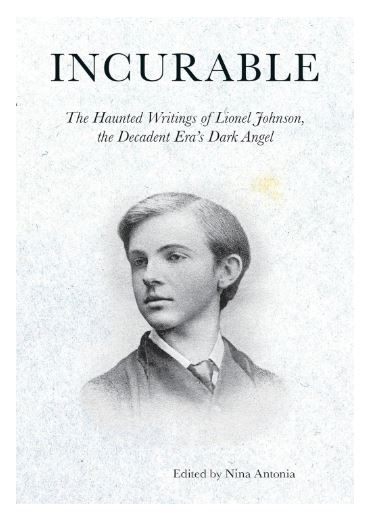
Originally published in 2018 by Strange Attractor Press, ‘Incurable’ sold out virtually overnight. Curated by myself & featuring an introductory biography of the ill-fated Lionel Johnson ‘Pale as wasted golden hair’ brings back to life the most reclusive of Poets of the decadent 1890’s. ‘Incurable – The Haunted Writings of Lionel Johnson’ is now available as a superior P.O.D via Amazon in the UK & US so why not mistreat yourself to a copy of the doomy decadent dandy’s literary melancholia. Best read by candlelight with an absinthe chaser. (PS, Lionel also introduced his special friend, Lord Alfred Douglas to Oscar Wilde, and lived to rue the day.)
Certain animals exude mystique. Experts in enigma, no cat could ever be ordinary. Our feline friends exist on a different plain, between reality and the other-worldly. Foxes have a similar allure possessing a feral mysticism. Whilst cats are mostly deified, Foxes are generally maligned, feared by city dwellers and hunted to near extinction by country folk. To survive they have to be virtually uncanny. Creatures of folklore, the fox is one of the principle animals that witches shapeshift into, whilst the Irish once believed that they were kindred to Faerie. One particular story that has stayed with me is that of keen huntsman who called off the chase when he realised that the Fox they were pursuing was pregnant. Thereafter, foxes would congregate outside the manor of the huntsman and his next of kin, to keen their strange song whenever there was a death in the family. My own Fox story is not quite as dramatic but worth telling. I had taken to feeding the foxes where I lived but it always seemed to be the same large lean male, the father of a small pack who dined outside my balcony door. The visits were always nocturnal but one bright summer’s afternoon I noticed him scampering irregularly across the lawn to my little patch of garden. Making no sound, he pressed his nose right up against the glass of the garden door and it was then that I noticed he had been badly wounded on his lower back. He then frantically tried to get underneath the tarpaulin which covers my mobility scooter. The fox and his family had taken refuge there in the past so he knew it was a safe place. A google search then ensued as I hurriedly left phone messages with a nearby animal sanctuary and the RSPCA. Thankfully, it was the animal sanctuary
that called back first. They informed me that the RSPCA tended to put rescue animals down if they were injured. Fortunately the practice of the sanctuary differed – they took every single animal to a local vet for treatment if they could be saved. After 3 weeks recuperation, the animal was dropped off where it had been picked up.
Sure enough, Mr Fox returned, looking much healed. I’ve never been certain whether he had accidentally hurt himself or if someone had lashed out at him with a gardening tool. Either way he was back. One curious thing that I’ve noticed is that whatever time I wake up Mr Fox and his mate depart the grounds as if they were waiting for me to arise. It is oddly comforting. They are still with me and I am still with them.
This evening I pulled myself from out of a pit of despair and watched a couple of things including a video of a creation called Chapell Roan. There she was on stage, well maintained voice, gorgeous tumbles of red hair, wearing some Cherie Currie style lingerie – I suppose that translates to Anne Summer’s style ‘Street Sweetheart’ undies. This was the first pointer that Chappell was in fact a corporate plant masquerading as a backwater 25 yearwas in fact a corporate plant masquerading as a backwater 25 year old of humble roots. Of course, at some point Ms Roan had been a genuine talent or she wouldn’t have been groomed to become a robot version of her past self. What big business fails to understand is that in the good old days, those gifted enough to succeed in the music industry such as Emmy Lou Harris or Debbie Harry who both excelled in being themselves and not record company makeovers. Amy Winehouse might have had a stage school background but her soul and song craft where her own. Younger audiences have been duped into believing that authenticity doesn’t matter, only it does because without it, there can be no real brilliance, no breath-taking moments of Leonard Cohen style calibre. As I watched Chappell Roan going through a series of well-tutored moves a little of my own soul died on behalf of the kids neutered into believing that careful corporate business constructs are real and not pre-programmed. Chapell Roan is neither particularly good or bad, she is merely a product of the times in which we live but without humanity, there can be no great art, only the tolling of an empty bell.






 Nina Antonia