I am so weary of the fight

I am so weary of the fight. Not just to write but to be understood. Recently a reviewer described me as a ‘Thunders Obsessive’ which lead me to wonder that if I had been a man, would they have said ‘driven’ or ‘ambitious’. To know a subject well doesn’t make a person an ‘obsessive’ it makes them studious or knowledgeable. The fight for dignity is harder for women, particularly ‘outsider’ women. I’m pretty sure that the reviewer doesn’t have a clue about the other books and articles I’ve written and neither does Wayne Hussey who condemned me as someone who ‘only writes about skinny junkies that she fancies’ or words to that effect in his lengthy autobiography, ‘Salad Daze’. No one ever disrespected William Burroughs but the same could have been said about him. When I started writing, I was interested in subculture, the Beats, what we might now call off-grid characters. People throw words around without understanding the implications of their glib, macho, perception. Mainstream life never interested me and neither do books about relationships. My childhood was so fractured, I didn’t understand healthy relationships, what it might be to grow up in a loving environment so my choices of early subjects where Noir, hard-bitten and decidedly nocturnal, life’s fire-flies are far more interesting than those who dwell in comfort and wealth.

In the last two years, I’ve had several articles published by Fortean Times, the last magazine I actually enjoy. Although I have some dear friends who are musicians, it has been liberating to step away from the realm of ‘rock n’ roll.’ The people whose music I loved are no longer with us whilst the music press is no longer as relevant as it used to be. It is also about growing up, moving on and returning to the oeuvre of fantasy and faerie that I loved as a child, before Marc Bolan arrived like a comet of Bo Diddley riffs and sequinned bliss. Roger Corman’s lurid cinematic adaptations of Poe, especially the ones featuring Vincent Price, also enthralled me as a lonely child. Later there was the ancient enchantment in the books of Arthur Machen and Algernon Blackwood as well as a fondness for Walter De La Mare’s often uncanny poetry. I’ve just discovered the verses of Thomas Hardy and appreciate his spectral evocation of the past. I have always tread the thorny – path between melancholia and depression which is well suited to tales of strangeness and the esoteric. Only the lonely can haunt their own lives.

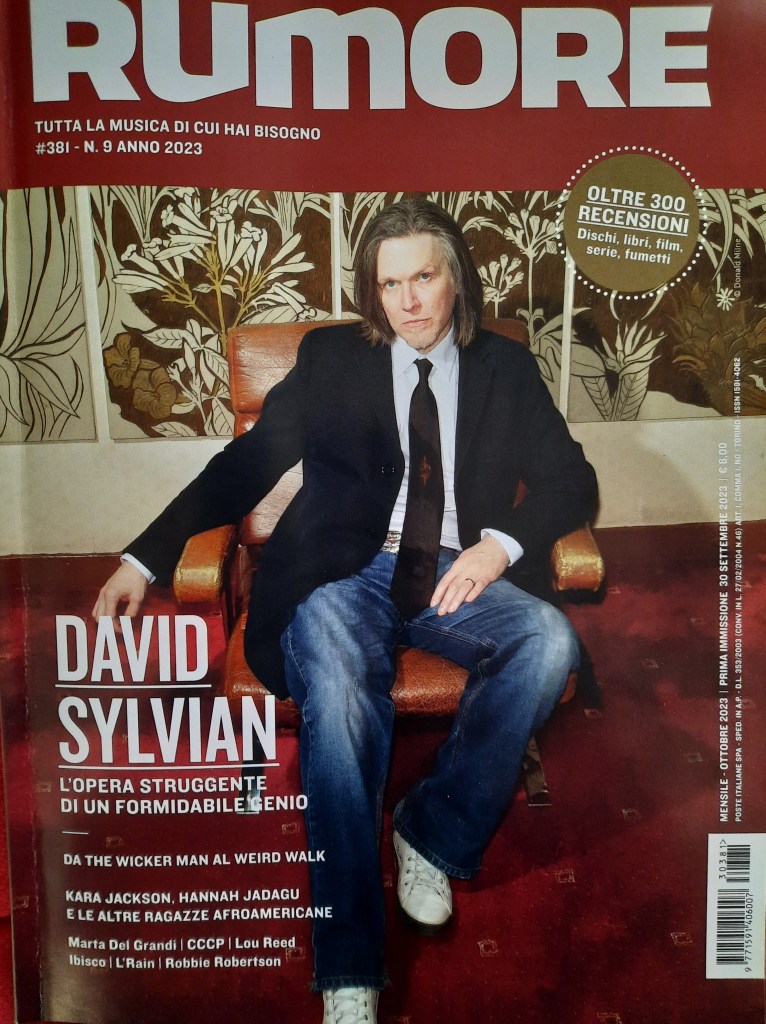
‘IN COLD BLOOD – REVISED & UPDATED EDITION’ Review by Andrea Valenti from ‘Rumore’ Italian Magazine

‘Third – and definitive, by explicit declaration of the author – edition of the biography dedicated to the king of the guitar, Johnny Thunders, originally released in 1987. … In Cold Blood remains a monumental work on a historical/biographical level, above all for the wealth of first-hand sources to which Nina Antonia had access.’ Andrea Valentini

Bric-a-Brac & Byegones

Bric-a-Brac & Byegones

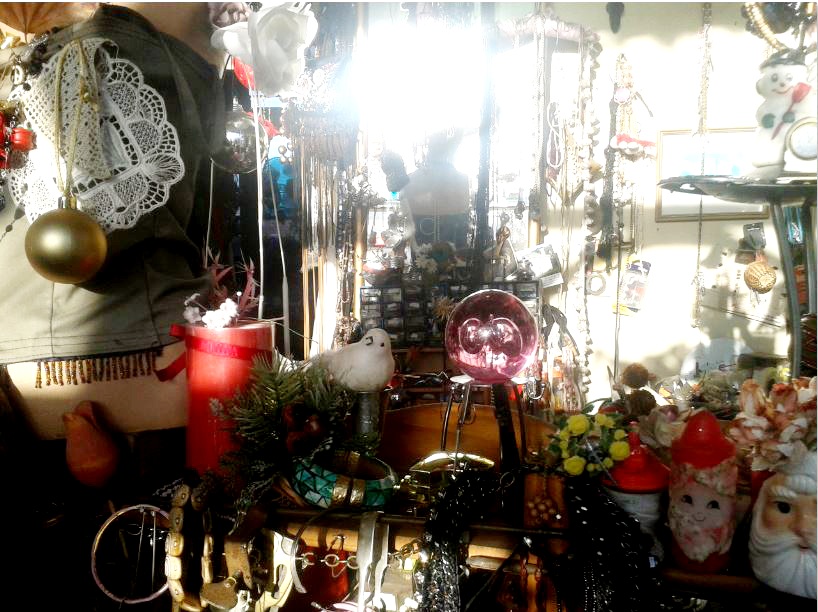
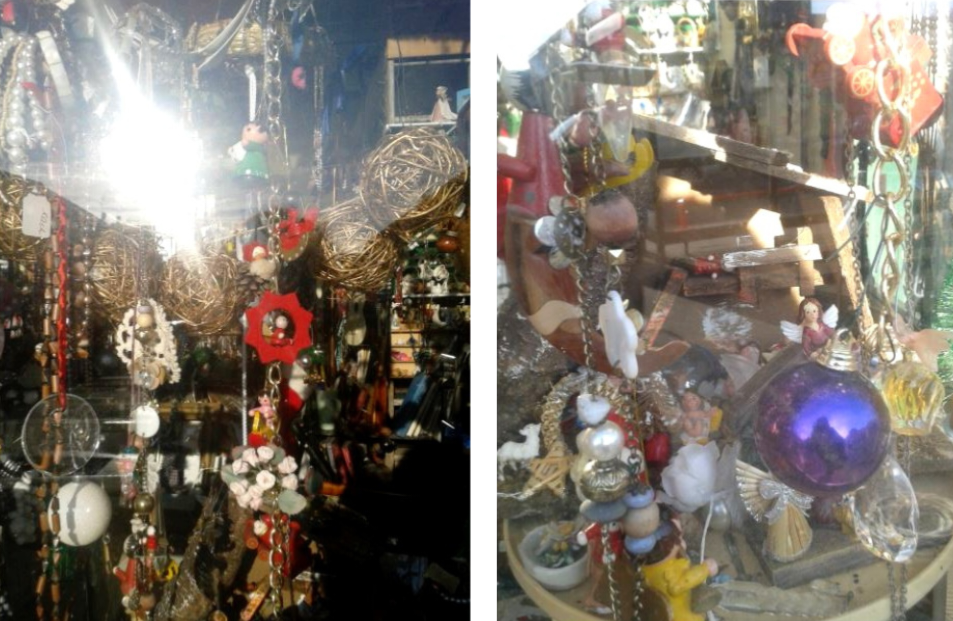
Most people like to rummage, hoping to find some treasure or trinket for next to nothing. Unfortunately, charity shops are no longer cheery grottos of disorder having morphed into overpriced boutiques. Woe to the down at heel dreamers, the stylish yet skint and those of slender means. Second hand on the high street has sadly become as regimented as any other outlet. Worse still is the scarcity of Bric-a-Brac shops, scrappy, overladen emporiums of everything people almost wanted and discarded keepsakes. Tinselled caves of melancholia stocked with the remnants and revenants of past lives, old photograph albums foxed with age, Victorian scrap books with pages missing, Rosaries and garish jewellery, costumes of the hapless, wedding rings from unfortunate unions and sheet music for songs no one listens to any more, abandoned toys from yesteryear and tattered lace recalling Miss Haversham. Ever since Dicken’s wrote ‘The Old Curiosity Shop’ Bric-a-Brac flourished, but no more. In recent years they had become the orphans and strays of shopping streets and largely overlooked aside from the perennial magpies of which I count myself. These days, car boot sales suffice but they are often in hard to reach locations for those dependent on public transport and lack the charm and faded gentility of Bric-a-Brac emporiums, where one could strike up some kind of rapport with the owner by merit of irregular visits.

In the past year, the remaining two local Bric-a-Brac shops have shut down due to the deaths of the respective owners whose combined age must have been in the region of 170. How lucky we were to have had them! The first, was run by a charming Italian gentleman whose name I sadly don’t know. Whenever a customer entered the shop, he would hide an ashtray full to the brim below the counter. Now and again he really would have a genuine antique but he could also romanticise even the most humble bit of junk, with lyrical ease. So stricken was I to discover that he’d died during ‘lockdown’ that I even wrote a poem about it that I’ve just had the pleasure of recording. It was seeing the shop empty, all the ornate clutter swept away, along with his life. Within a month or two it had become a nail bar on a street that already had one. That shop had been the soul of the thoroughfare, something real and familiar and it had virtually vanished overnight. In walking distance was ‘Memories of Mortlake’ run by elegant Elka from Austria. I had been a regular for nearly 30 years. The front of the shop was bright baubles, old carvings, scrapbooks, embroideries, brooches, a dazzling array especially in Summer when the bright light would make prisms in the window. In Winter, Elka would place holy relics in the window, pushed up against Welsh Dolls and little figurines of Dutch boys & girls. As Elka aged, still with regal posture and Katherine Hepburn style, so the shop became more unruly and yet no less appealing. Unfortunately she became increasingly possessive of the items. One afternoon I picked something up and asked the price, she practically pulled the object from my hand, exclaiming ‘Oh isn’t it pretty! I’m not sure that I want to sell it.’ Elka lived above the shop that was her life. As I was to discover, she kept the best for herself but she was kind enough to let me see the upstairs of her domain which was the most glorious antiquarian mess that I’ve witnessed. Sat along the three flights of stairs were Victorian Dolls in different stages of dishevelment propped up on picture books of equal age. The walls were crazily paved with masonic certificates, Edwardian religious tracts and odd paintings, mainly dramatic biblical scenes. In the lounge, there was nothing but sculptures, all these stone heads staring into the cosy dusk of a room rarely used whilst the roof garden festooned with Ivy and other tangles of plants had become a graveyard of broken statues, still beautiful but past reclamation. The kitchen was overrun with vintage ceramics and yet more paintings and prints including one by Margaret Tarrant, an illustrator of whom I am particularly fond. The picture was of a little Pan playing his pipes for two enraptured children. I still have that picture on the wall by my desk.

‘Incurable’ Review by Cathleen Mair for The Idler

‘Like a glimmering of a votive candle in one of Johnson’s dream churches, Incurable sheds new light on one of the most gifted, if reclusive, poets of thefin-de-siecle. Incurable pays tribute to this enchanting and eccentric poet while providing fresh insight into an era that continues to fascinate.’ Cathleen Mair for The Idler

Unquiet Grove’ from Egaeus Press

Autumn’s almost on the wing, bringing with it ‘Unquiet Grove’ the latest equisitly chilling anthology from Egaeus Press. One of my favorite independent publishers, it was a pleasure to write the introduction for this feast of phantom forests, green unease, forbidden paths and whispering witch-fungus. ‘Unquiet Grove’ is now available to order from www.egaeuspress.com

Nina Antonia Interview

AUG. 13, 2023, 3:32 P.M.

Music Journalism Insider

I’m Todd L. Burns, and welcome to Music Journalism Insider, a newsletter about music journalism. Click here to subscribe!

Nina Antonia is author of Johnny Thunders: In Cold Blood. The book was first published in 1987, but has been revised and expanded to coincide with the 50th anniversary of his debut album with the New York Dolls.

How did you get to where you are today, professionally?

If I was to tell you about my journey as a music journalist and author, we would be here all day and night! I didn’t go to school to study journalism and always wrote from the heart, for the passion of the subject rather than cold objectivity. People have different ways of getting into the field and although education and a university degree is helpful, sometimes it can make people’s work a little homogenised. The people I looked up to as music journalists were Lester Bangs and Nick Kent whose personalities seep through in their writing. They are very much products of their time but still readable, they capture the energy of those times.

The first edition of Johnny Thunders – In Cold Blood which came out in 1987, when I was 27, is very different to the updated 1992 version, I’d had time to grow as a writer and gather more material. I’ve written countless liner notes, aside from Thunders, there has been the Dolls, Stooges, Velvet Underground & Nico, in fact I think there is a kindle book of the sleeve notes that Jungle Records compiled. I never looked upon writing as a profession or a job. For me, it was a vocation and I still feel that way.

In my late teens I read Truman Capote’s In Cold Blood, Norman Mailer’s The Executioner’s Song and most importantly Ladies and Gentlemen, Lenny Bruce as well as work by Burroughs and Genet and that informed my approach. Of course, I wasn’t a lauded male author, I was an inexperienced young woman with a dream! Johnny loved the idea of there being a book about him! In the long ago days of the mid-1980’s, rock books were far fewer. However, Barbara Charrone had just worked with Keith Richards on an authorised biography, so that was fortuitous as it meant in Johnny terms, “If it’s good enough for Keith Richards to have a chick write his story, then it’s good enough for me!”

After the book first came out, I did sporadic work for the music press, Record Collector mostly, Jimmy Miller, Wayne Kramer, Richard Hell, Jayne County, people who weren’t really being picked up on at the time. As a woman and a single mother, I worked my own niche, there was very little support. Sadly but predictably, after Johnny died in 1991, interest in the book grew and there was a greater demand for it. By that point, I was more confident as a writer and had accrued more information, including an in-depth interview with Jerry Nolan. For whatever reason, even as a young person, I had a sense of wanting to capture time. Johnny and the mileu around him were exceptional people, even if flawed but their time was fleeting. That’s the rock n’ roll life for you.

I kept on writing, had more books published, including The New York Dolls – Too Much Soon which had done well, but getting paid work was still sporadic, though I did contribute to MojoUncutClassic Rock and umpteen others. When Johnny died, the lights went out for me in terms of what I liked in music, although I was still listening to stuff: Nick Cave’s early work, Nico I’ve always loved.

Maybe it was part of growing up—however, I’d always been interested in fantasy and decadent literature and that is the field I’m now writing in. I’ve had a novel published The Greenwood Faun (Egaeus Press) and a collection of essays Dancing with Salome (Trapart) as well as collating the poetry and essays of the ‘forgotten’ Victorian poet, Lionel Johnson, for a volume entitled Incurable, which includes a lengthy biographical introduction I also wrote. More recently, I’ve had articles published, including cover stories for Fortean Times which is the only magazine I’m likely to read these days!

Can you please briefly describe the book?

The Bible of All Things Thunders: a candid, unflinching portrayal of one of the most influential musicians of the 20th Century.

How did you come to this subject for a book? What made the topic so interesting to you?

Because he represented the spirit of rock n’ roll, Johnny was like an electric charge! I’d adored both the Dolls and The Heartbreakers and couldn’t understand why no one had written a book about Johnny. Iggy Pop’s I Need More had just been published and that was another prompt. As I mentioned earlier, in those days, rock books were far fewer, whilst information was less readily available pre the internet.

Since the Dolls, I’d been collecting whatever press there was on the guitarist, which was helpful. Johnny was a man of mystery and, as I was to discover, he was quite a private, shy person. The UK media loved posting teasers as to his whereabouts. At the time I began the project, either the NME or Sounds had announced that he was on the run from the mafia due to his having had an affair with the daughter of a Don. It was utter nonsense of course… or maybe it wasn’t! You never could tell with Johnny, he lived a midnight kind of life, which of course made him a fascinating character to write about. He breezed into a room like he was on the set of Mean Streets, which was irresistible from a literary perspective.

What did the research process look like?

Due to my circumstances, it was initially patchy. I had my press cuttings of course but I had to learn on my feet by doing interviews with some of the people who were around Johnny at that time, for example Leee Black Childers, who had worked with both Bowie and Iggy and then managed The Heartbreakers, Stiv Bators when he was adding backing vocals. Because Johnny was quite a quiet person and he’d answered the same old questions a million times before, he suggested that I write by observing what his life was like. I used to imagine that I was a camera!

What was the hardest thing about the whole project?

Getting a publishing deal. Don’t forget I was an absolute beginner when it came to knowing how to get a book deal, what a publisher actually does and distribution which is all important. First of all, I wrote to all the established publishers, maybe 10 or more and had to get used to rejection slips. I was disheartened, but knew there had to be a way to progress. I even contacted the NME, which was then Britain’s leading music paper. The editor, Neil Spencer, told me I should give up on the idea and that Thunders’ music was found to be wanting not just by him but by all the members of staff.

Virgin Books, who were then quite a big concern, got in touch and suggested that I have a meeting with their editor, whose name I can’t remember unfortunately. I think I may have deliberately erased the memory cells. I was living in Liverpool at that point so had to sell off a great many records to be able to pay for the coach fare there and back, but I figured it was worth it and was quite upbeat. I was invited into this really plush office and after handshakes, the guy told me he liked my writing. Great! I thought he was going to give me a deal for it, but he took the same route as the NME. He didn’t hold Johnny as being in any way important and nor did he think punk was important, other than the Sid Vicious Family Album which they were publishing. I think the guy thought he was doing me a favor by concluding that if I was to choose more commercial subjects such as Frankie Goes To Hollywood or Lionel Ritchie, I might just get a book deal! Although it was upsetting, I was young and feisty and certain that the world really really needed a book about Johnny Thunders.

What was the easiest thing about the whole project?

The easiest thing was when Johnny signed to Jungle Records in London and the director of the company said they would publish the book. Finally! For many years, the rejection letter from the NME‘s editor Neil Spencer took pride of place in the toilet of Jungle Records. It’s worth mentioning that Jungle were and remain a truly independent label, there are no penthouse offices with sculptured fountains, but simply the desire to release music and somehow survive in increasingly corporate times. After Johnny died in 1991, there was increasing demand for the book. By that point I had gleaned a lot more knowledge than had previously been available as I’d written a book on the NY Dolls entitled Too Much Too Soon (Omnibus Books) I was able to incorporate that into the new edition which was published via Cherry Red Records. Johnny Thunders ‘In Cold Blood’ has had quite a journey and is now available through Jawbone Press. They’ve done a lovely job on presentation and it has a new chapter as well as an introduction by Mike Scott of the Waterboys. Few books get to travel quite so far. There have also been Italian and Japanese versions. Imagine if I’d stopped trying after the Virgin debacle?

Did you have any mentors along the way in your career? What did they teach you?

If I look back to the earliest incarnation of In Cold Blood, then I would have to say it was my ex-husband, Kris Guidio, who was an illustrator. Originally we hoped there would be space for his artwork, but that turned out not to be viable. Nonetheless, he edited my work and would point out anything that was glaringly gauche. I was a novice at my craft, having only written a few articles for a local fanzine, but I was young enough for passion to override caution.

As the book took shape, there were a couple of people who were really inspiring, particularly The Heartbreakers former manager, Leee Black Childers. As well as being a great photographer, he was also a fabulous raconteur. Johnny’s manager, Christopher Gierke, also taught me a lot, he was very philosophical and unconventional in his approach. Both Leee and Christopher were extremely encouraging even if the rest of the world wasn’t.

If I think about all the fantastic people, the last of the post-Warhol, New York art scene and how kind they were, I’m quite taken aback. Although I’ve been a writer for the longest time now, that was the honeymoon, believe it or not. It was the culture beyond that, the English rock media, who were far less welcoming. Women were accepted as photographers, but it took a long while for them to be accepted as music writers.

What’s next for you? Anything you want to plug?

I suppose the spark of rock and roll died for me when Johnny passed, although like I mentioned there is a New York Dolls biography that is still available and I also edited Peter Doherty’s diaries for him, as well as continuing to write sleeve notes and the odd magazine article. However, the days of Lester Bangs and Nick Kent are far far behind us, music is just another commodity rather than a way of life. Plus going to gigs became very expensive and I don’t like stadium shows. The best place to see a band is in a small sweaty dive.

However, I have a need to write and I’d always liked decadent and fantasy literature, as well as certain types of poetry, Edgar Allan Poe was an influence, Wilde’s Dorian Gray too. But I didn’t have the confidence to write about it until I got into my late 50’s, when I submitted a short story to an independent publisher, Egaeus Press. They produce beautiful limited edition books that are meant to look like Victorian annuals. They also published my first novel, The Greenwood Faun which is a ghostly gay love story set in Victorian London. Following on from that, I collated the poetry and verses of the “lost” Victorian poet, Lionel Johnson, for a book entitled Incurable via Strange Attractor Press. A new edition of Incurable is expected before the end of the year. Michael Dirda of the Washington Post has reviewed my writing favorably and I got a lovely write up in the Gay and Lesbian Review for Incurable.

The last project I worked on was a series of essays about the uncanny aspects of Oscar Wilde’s life, Dancing With Salome, which is available via Amazon and through Trapart Books. I’ve also started contributing to Fortean Times which is a great magazine covering anomalies, from UFOs to Poltergeists and all manner of strange things! It’s like if X-Files was English and turned into a magazine.

Did you enjoy this interview? You can support this newsletter by subscribing here. Among other things, you’ll get full access to all 600+ interviews I’ve done as part of the newsletter. I’ve talked with writers and editors from Pitchfork, Rolling Stone, the Guardian, and many more.
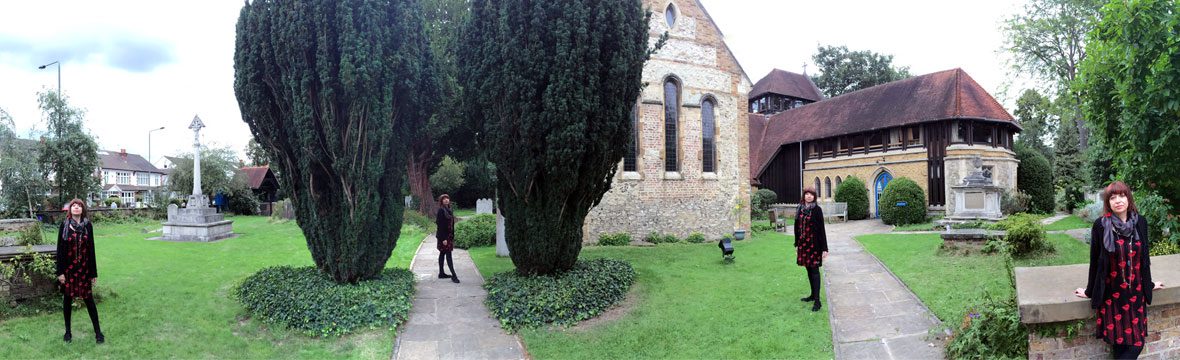
Nina Antonia reviews Phil Baker’s ‘The Perfumed Cesspit’ for Fortean Times

‘The Perfumed Cesspit’: My review of Phil Baker’s book ‘City of The Beast – The London of Aleister Crowley’ (pub. Strange Attractor Press) which appeared in the June 2023 edition of ‘Fortean Times.’ I have two of Phil Baker’s books, namely his study of absinthe and his biography of Austin Osman Spare, interesting subjects both. The challenge of reviewing ‘City of The Beast’ however was my dislike of Crowley. As a wealthy and privileged Victorian male, every pleasure was his for the taking whilst he immersed himself in the darker side of magic(k) Volumes have been written about Crowley and his devotees are legion. Why? He serves as a symbol of rebellion; a one man pre-cursor of the Swinging Sixties but he was a cruel narcissist, his ego as big as the mountains he once climbed, who cared not for those he wrecked, ravaged and slandered, including two partners who both ended up in asylums. Despite this, Baker’s book is an engaging read that captures a freer more bohemian London peopled by a glittering guttersnipe cast.

New Worlds

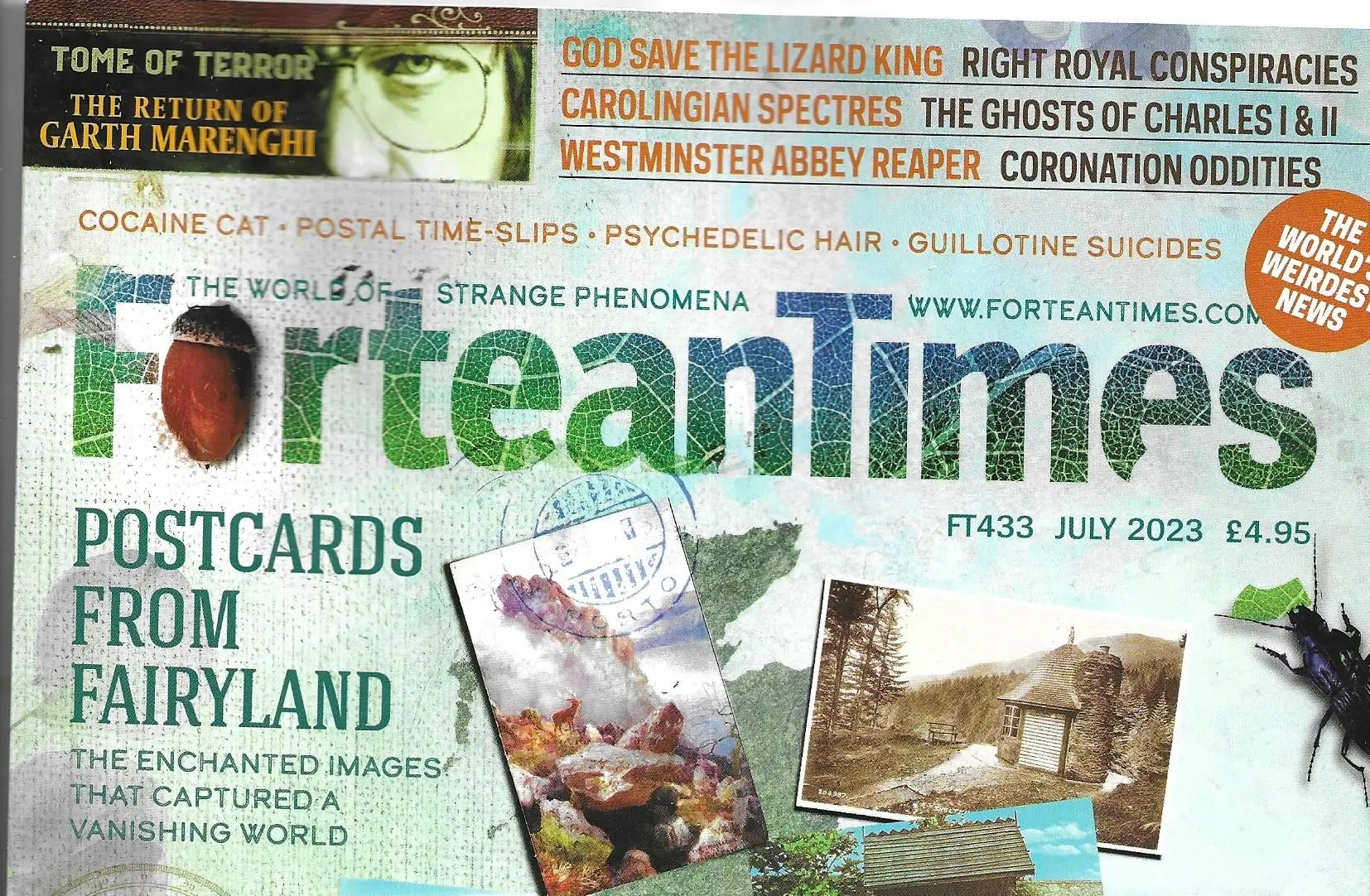
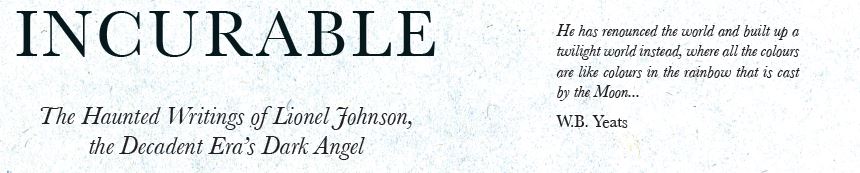
I’ve been writing for 30 odd years now and like all creative people my work has evolved over time. I would never have imagined after decades as a music journalist and biographer that two articles of mine would be featured on the cover of ‘Fortean Times.’ The first pre-empted the publication of ‘Incurable : The Haunted Writings of Lionel Johnson, the Decadent Era’s Dark Angel’ in 2018 via Strange Attractor Press. The winsome Johnson had largely been forgotten despite having been a pivotal figure of the Decadent Era. As well as being a driving force in the Celtic Revival, spearheaded by W.B Yeats, who held the poet in high regard, Lionel also introduced his special friend, Lord Alfred Douglas to Oscar Wilde enabling the greatest scandal of the ‘Fin de Siecle.’ As ethereal as it’s possible to be without being invisible, Johnson had slipped through the pages of time which made him deeply appealing. (Those who enjoy universal acclaim tend to be without wit or wonder, at least from my perspective.) Strange Attractor Press, one of the most astute publishers in the UK for discovering and retrieving lost or esoteric culture picked up on the Lionel project. (My thanks to author Mark Valentine for making the initial introduction) Weeks of feverishly typing out a selection of Johnson’s poetry and essays followed, rounded off with a lengthy biographical introduction. Virtually a life-long dipsomaniac, poor Lionel had declared himself ‘incurable’ to W.B Yeats, who had expressed concern over the poet’s drinking. ‘Incurable – The Haunted Writings of Lionel Johnson, the Decadent Era’s Dark Angel’ received critical acclaim and is due for a reissue later this year, on kindle and in print. Lionel Johnson might not seem an obvious subject for a magazine like Fortean Times but like a tale written by Poe, he was haunted by a strange avian entity not long before his death. The haunting became one of the last great unsolved mysteries of the Victorian age and Lionel the obscure became a Fortean Times cover star! Named after Charles Forte, ‘Forteana’ is the study of anomalies; ghosts, fairies, flying saucers, big foot etc and the only magazine that I both read and contribute to these days. In the same way that music had once seemed boundless and free so the subversive nature of Forteana gives it more latitude in a world ever more mundane. Earlier this year FT also included an essay of mine on the uncanny aspects of Oscar Wilde’s life, to coincide with a book of essays published via Trapart entitled ‘Dancing With Salome’ but I digress ever so slightly because life never runs on straight lines.

For three years I had struggled with finding a story-line for a novel. It seemed like all the good ideas had been taken, not just in the present but in the past as well. My imagination and notebook was crammed with opening paragraphs and insubstantial characters. Plots were circled and revised, whilst pen portraits of shadow people refused to hear my literary entreaties. The best thing to do when words are being skittish is to take a break. Every few years I reread my favourite book, Arthur Machen’s ‘The Hill of Dreams’ (pub. 1907) Each time I picked it up, I would find something new in Machen’s enchanting, decadent prose, immersing myself in what the author had described as ‘Impressions of wonder and awe and mystery.’ Again I must doff my cap at David Tibet, singer, artist and visionary, who had the foresight to introduce me to Machen’s work. It was a pivotal moment in how I thought about writing, Machen unlocking the door to a sense of lambent, impressionistic craftsmanship that I longed to somehow incorporate in my own work. ‘The Hill of Dreams’ features a young dreamy boy, Lucian, who inspired by the pagan countryside where he grew up, moves to London to fulfil his dream of getting a novel published. Lucian’s hypnotic dissolution in the labyrinthine city has an unearthly compulsion as he loses himself in a series of visions induced by near starvation and Laudanum (opium in alcohol) although Machen is too good a writer to point out the obvious. Tragic Lucian perishes before he can finish ‘the great work’ leaving behind a wild flower thicket of literary flights of fancy, glimmerings of a strange and ineffable radiance which he can sense but not describe. He dies with the pieces of the manuscript strewn about his desk, described by Machen as ‘illegible hopeless scribblings; only here and there was it possible to read a word.’

Had no one pondered the fate of Lucian’s manuscript? All we know from ‘The Hill of Dreams’ is that ill-destined author had left his few worldly goods to his landlady. The idea was to consume me until I began writing ‘The Greenwood Faun’ which opens with the discovery of Lucian’s lost manuscript. Thus commences a gay, ghostly love story set in Victorian London against a decadent backdrop and a conjuration of Pan. This then was the novel which found me rather than it being the other way around. ‘The Greenwood Faun’ was written in 6 months, the length of time that Lucian Taylor had spent on his manuscript. It was subsequently issued as a deluxe limited edition by the independent fantasy publisher, Egaeus Press, whose books are also works of art, harking back to Victorian annuals. I cried when I first saw a copy of ‘The Greenwood Faun’ it was so very beautifully produced, with gold edging and exquisite art nouveau end papers.

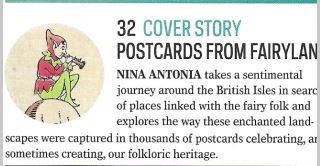
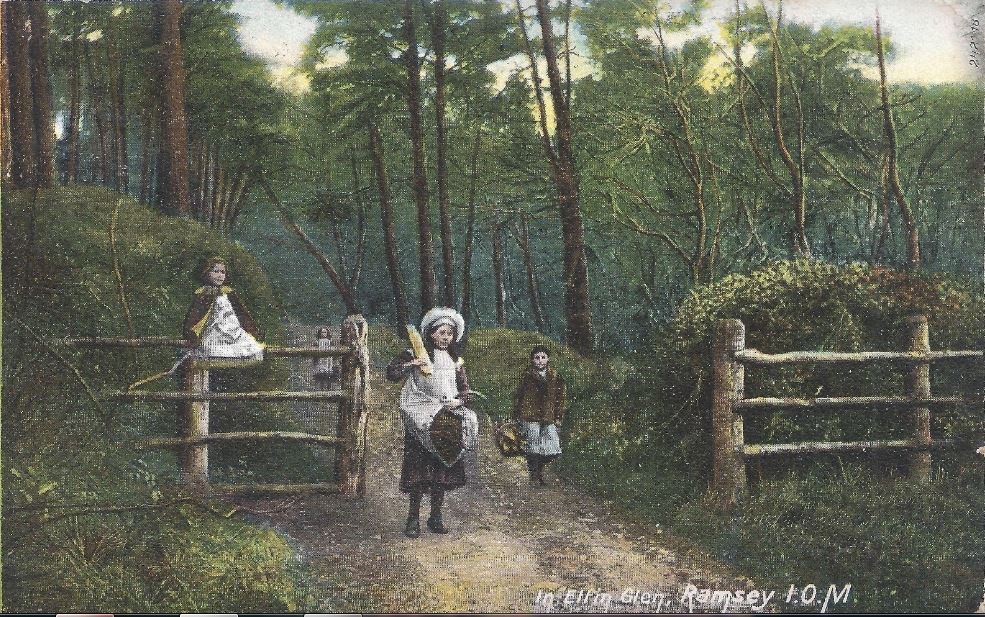
Inspiration is surely a magical process, although it doesn’t come from nowhere and is the hardest thing to define. Irish folklore tells of the ‘Lianan Sidhe’ a beautiful fairy-muse who imbues artists, musicians and authors with the treasure of creativity but in return, they must pay with their lives. When the fires of rock and roll dimmed after Johnny’s death, a whole universe vanished, like Atlantis. It took a while to find my bearings but books had always proved a solace and so I returned to the fantastical and phantasmagorical subjects that had always entranced me. I’m not certain when I purchased my first ‘fairy’ postcard but I do remember that it was a hand-painted image of Lough Fee, in Ireland at twilight. In that picture, the ineffable quality inherent in Machen’s writing had transferred itself into a vision, albeit through the medium of postcards. Five years later, I had amassed quite a collection of mainly Victorian postcards featuring Fairy Glens, Fairy Steps, Fairy Chapels, Hob Holes and Pixie Parlours. Most of them had folklore attached but in capturing those fading bygone postcards a story surfaced of how beauty spots had been stolen from the public by private concerns and the enchantment of fairy inherent in wild nature had been devoured by commercial interest. ‘Postcards From Fairyland’ made the front cover of June 2023’s ‘Fortean Times.’ It was delightful to see some of the postcards that I had most treasured featured in the magazine. Might not these be the landscape of ‘The Hill of Dreams’?

Postcard from Fairyland, Ramsay’s Elfin Glen. Visitors to the still leafy glen often sense that they are being watched

“Johnny Thunders: In Cold Blood”/Nina Antonia [Episode 144]

Eric Senich|7/23/2023

Thirteen years ago, author Nina Antonia wrote the cult bible of all things Johnny Thunders with her book Johnny Thunders: In Cold Blood. It’s the definitive portrait of the condemned man of rock and roll, from the baptism of fire and tragedy that was the New York Dolls, through the junkie punk years of the Heartbreakers, to his sudden and mysterious death in 1991. A brand-new edition was released this week, adding a new closing chapter, bringing Thunders’ legacy up to date with new photos and a foreword by Mike Scott of The Waterboys. Nina is about to tell you all about it in this episode!

Purchase a copy of Johnny Thunders: In Cold Blood: The Official Biography: Revised & Updated Edition through Jawbone Press HERE

Listen to a playlist of The New York Dolls, Johnny Thunders & The Heartbreakers, and Johnny Thunders solo HERE

Find Nina Antonia online at her official website HERE

Follow Nina Antonia on Twitter HERE

Visit the Booked On Rock Website HERE

Watch exclusive video segments from the Booked On Rock podcast HERE

Follow The Booked On Rock with Eric Senich:
FACEBOOK
TWITTER
INSTAGRAM
TIKTOK

Support Your Local Bookstore! Find your nearest independent bookstore HERE

Contact The Booked On Rock Podcast: thebookedonrockpodcast@gmail.com The Booked On Rock Music: “Whoosh” by Crowander / “Last Train North” & “No Mercy” by TrackTribe