How could I not wish to contribute to Hellebore’s first excursion into the realm of fiction? The magazine continues the tradition of fantastical subject matters from folklore to the supernatural that originated from stories told by candlelight before literacy was widespread. Later these strands, be they of faerie, witchery or superstition were to influence writers such as MR James, Arthur Machen, E. Nesbit, Algernon Blackwood, Edith Wharton and EF Benson. It is without embarrassment that I confess to being old fashioned when it comes to horror/fantasy whether in books or film. Roger Corman’s cinematic vehicles for Vincent Price and Hammer films offer a rich banquet that I’ve never really left, bar one or two exceptions. The first person to introduce me to this dark vein of culture was my grandmother, who talked fondly of Edgar Allan Poe, which if you’d have met her would have seemed extraordinarily out of character. Uncanny tales should always have good manners, at least in my book. Splatter and gore are the slaughterhouses of imagination. As this is my blog, I’m allowed to digress…..
Hellebore’s foray into publishing a literary anthology grew from the tendrils of their guide to ‘Occult Britain and Northern Ireland’ which was issued to acclaim in December 2021. The dark months of the year seem to lean towards such things but it was in the spring of 2025 when I was first contacted by editor Maria J Perez Cuervo, who also founded Hellebore to submit a story based on one of the places in the original ‘Guide’. London’s Highgate Cemetery is not an obscure location but it is one of the most atmospheric that the city has to offer, the poetic equal of Pere – Lachaise in Paris. I had never written about vampires before but the cemetery and more specifically, Swain’s Lane that runs adjacent to it had left an uneasy if memorable impression on me. Seen in daylight, it is a very pretty narrow road, a fence allowing glimpses of the graves and foliage that runs alongside it. The road twists and turns leaving blind-spots but it is easy enough to walk down. Nevertheless, Swain’s Lane left me feeling apprehensive. The fact that it was subtly, even politely creepy only served to make it more unsettling. Despite its beautiful gloom, the cemetery itself felt far less off kilter.
What makes ‘The Highgate Vampire’ particularly compelling is that it is relatively recent and allegedly real. The majority of British vampires tend to be of antiquity, aside from the fiend of Croglin Grange who was allegedly active between 1875-6. Opinions vary as to whether the Croglin Grange vampire was fantasy, folklore or fact. In the case of the ‘Highgate Vampire’ however, there were several eyewitness accounts, the majority of which were reported in the Hampstead and Highgate Express, including one from a Mr. R Docherty who claimed to have seen ‘a tall man in a hat who walks across Swain’s Lane….and just disappears though a wall into the Cemetery.’ (February 13th, 1970) The presence of the supernatural, decades or even centuries later can leave a residual essence like invisible finger prints on a location. That sense of psychic trespass on Swain’s Lane was to stay with me for over a decade until I heard from Maria and then I knew it was time if not to lay it to rest to at least give it an unearthly resonance.
The book itself is a dark treasure, produced to the high quality of design associated with Hellebore magazine, whilst the stories bristle with magic and menace. Contributors include Ramsey Campbell, Steve Duffy, Helen Grant, Verity Holloway, Eoin Murphy, Reggie Oliver, Steve Toase and Ally Wilkes. It’s a pleasure to be included in such a strong line-up of authors, capable of capturing the uncanny evoked by certain locales. For further info, please go to www.helleborebooks.com
Before the internet, newspapers and magazines used to feature small adverts that proclaimed ‘Become a Published Author.’ These ads were to be found nestled in the section before the obituaries but after the lonely hearts and side by side with fortune tellers and Mediums. There was something murky about the ‘Published Author’ proposition as an ‘agency’ fee was required. Paying to get your work in print was known as ‘vanity publishing’ and appealed to the naïve, credulous and inexperienced. No legitimate publishing house would ever expect an author to pay to see their work in print. Now the age of the internet is upon us, those little adverts have vanished into the ether to be replaced by a far more sophisticated racket. Kindle has opened the floodgates to faux agents, faux tutors, faux journalists and faux promotion as well as faux publishers who all for a fee will enable your literary ambitions to be realized. Fussy formulas for writing books are also widespread and largely serve to hinder the creative process. There seems to be no direct source to these new rules, rather they exist and are followed. I noticed a young woman appealing to the #writingcommunity for advice as she couldn’t plot mood changes without upsetting the plot’s progress. The problem with adhering to a ‘formula’ is that the writer’s output will be process driven and lacking originality. Then there is the fallacy of ‘Beta Readers’ – the literary novice is advised to give out their transcript to family and friends to read for their feedback but these aren’t professionals and too many opinions are likely to send the project off course. The aspiring writer must develop an inner voice. None of the literary greats needed to follow other people’s directions, the joy of their craft is in their individuality and their unique expression. Their work still rings true decades long after they first put pen to paper or pounded the keys of their typewriter. Can you imagine Virginia Woolf, Willa Cather, Charles Dickens, Ernest Hemingway, William Burroughs, Jane Austen, Angela Carter, Edgar Allan Poe, Oscar Wilde and other literary luminaries meekly submitting to writing templates?
There used to be a saying: ‘Everyone has got a book in them’ but not everyone has a good book in them. Playing upon would-be author’s ambitions for a price is unethical, although this goes against the grain of modern thinking where encouragement rather than discernment is the focus, which makes people wide open to advantage takers. Of course everyone wants to find the winning lottery ticket and so there is the belief that self-publication might bring the author to the attention of the literary establishment. It has been known to happen now and again. The authors who do best out of self-publishing are the ones who are already well known. If you want to be an author, avoid formulas and run free with your ideas. It is a very difficult path to tread and few get rich but if writing is your vocation then you must try. Anyone who tells you that writing is a career is sorely mistaken. Writing is a craft, an art, a calling from deep within for self-expression. Of course, education helps but the need to fashion something out of nothingness and the ability to create an original work cannot be taught.
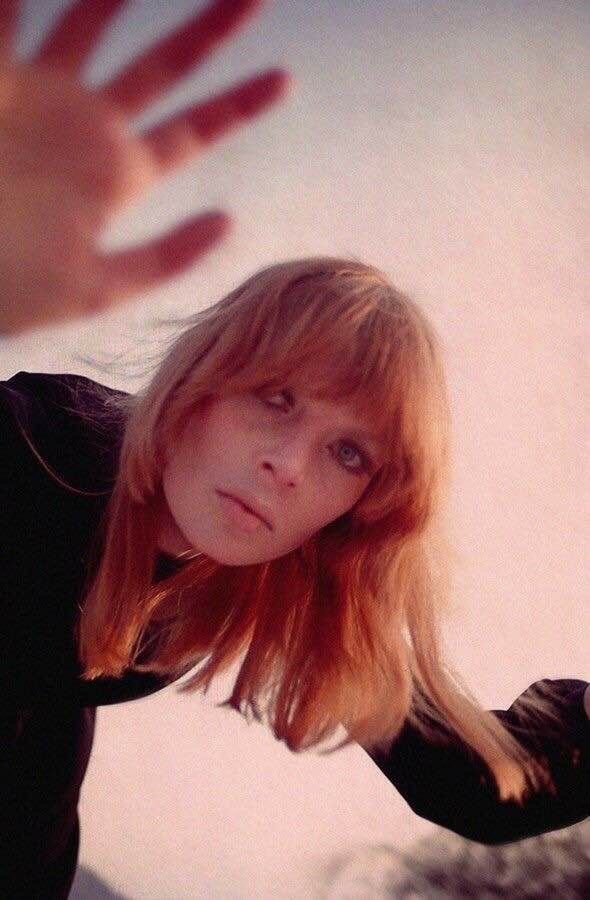
Over a decade ago, I began interviewing some of the people who had known Nico whilst she was residing and performing in Manchester, in the latter part of her life, with the hope that I could get a publishing deal. This alas was not to be but the material I collected is more than worthy of sharing. This particular conversation with Barbara Wilkin, who was Nico’s friend and driver, is very poignant and revealing. Nico was enigmatic but without tarnishing her mythology, Barbara Wilkin’s thoughtful account goes some way to explaining it.
In 2024, Hann, the daughter of Barbara Wilkin, released a delightful single entitled ‘My Mum was Nico’s Driver.’
Barbara Wilkin Interview
N: How did you meet Nico?
B: It was in 1982, at a concert in Holland in Apeldoorn. I went with 2 journalist friends who wanted to interview Nico. As it turned out, they never found her but I did. It was a day that changed my life because I wouldn’t have ended up in Manchester if I hadn’t gone to the gig. At the time I was learning to play the drums and I watched Toby (Phillip Toby Tomanov) the drummer throughout the concert, so he came over afterwards and said ‘Why did you look at me that way? I started dropping my drum sticks’. I ended up back- stage; I remember the band, The Blue Orchids, were sitting around a table and at the head of it was Nico. After being introduced, I took a seat. The moment I sat down I felt Nico’s eyes upon me. I found this unsettling and tried to avoid looking back, but risking a few brief glimpses just to be sure. Nico kept looking and she held my stare and looked deeply into my eyes and said in German (translates) ‘You don’t have to be afraid of me; I’m only an old woman.’ I was flabbergasted that she had caught on that I was German. She was scary to be honest, she had scary eyes. That was our introduction. She took an interest in me. When I first came to England, it was to be with Toby the drummer, we were going out. Later when I split up with him, I was working with Alan Wise and became their driver. There were people who didn’t want to travel with Alan or Nico so I drove them. At one point we had two mini-buses going around Europe. It was quite a sexist environment with all these Mancunian guys. When Alan said I should drive and work for him there were certain guys who didn’t like having a girl on tour but Nico and I were the only girls. Sometimes there was a little bit of rivalry over who should do the driving as Nico had been the driver for the Velvet Underground. She kept insisting on how great a driver she was. She’d sit behind me and dig her knees into my back! At one point when were crossing the Alps I stopped on a slope and said ‘okay’ and gave her the car keys. Everyone else deserted us, so it was just Alan and I but when Nico tried to drive, the car kept stalling. She was really upset that she hadn’t been able to pull it off.
N: Nico’s enigma?
B: She didn’t want to be Mainstream. She told me that Patti Smith had given her a pump organ, the one she came to Manchester with had been given to her by Patti Smith. (after Nico’s harmonium had been stolen) I liked Nico for the heavy German stuff that is what I heard first, rather than the Velvet Underground.
N: I’m wondering if there was something about herself that she didn’t understand
B: That might well be the case. If you look at Nico and how she grew up, her mum was mad, she didn’t really know her father. She told me things about him, he looked like Gregory Peck, he was really handsome but he was homosexual which was why the Nazi’s killed him in a concentration camp. I don’t know the historical details, what is written on Wikipedia might not be right. Allegedly his family rejected him (like Ari, like Nico? N) Nico talked about that a lot. We went to see her father’s family in Cologne. They were wealthy people who owned a brewery. She should have got some kind of inheritance from them. In 1985 or 6 we were in Cologne, Nico had a gig there, she pulled out an address and said ‘Let’s go and see these people’ so we went and rang the doorbell. A woman opened the door. When Nico said who she was, the woman slammed the door on her. That was as far as we got. She was upset about it and it wasn’t just for her, she was thinking of Ari as well.
N: It seems that she did try to look out for Ari
B: She told me once that she’d never been as well organised as she had been when she was pregnant with Ari, she was responsible at that time.
N: The majority of the men in Nico’s life seemed to have been quite unsubstantial and ephemeral figures. She never got to bond with her ill-fated father then there were liaisons with Brian Jones, Jim Morrison, Alain Delon…….
B: Men adored her for her looks when she was younger. She talked about men in different ways, she adored Jim Morrison, never said a bad word about him. Alain Delon she had no good words for, she said that he was violent to her. It’s so obvious when you see Ari where his genes came from, but I think she felt upset and betrayed by Delon.
N: The change from light to darkness, an intellectual decision to be taken more seriously as an artist?
B: It might have been a combination of both and also she had red hair when she was with Phillip Garrell, he may have had an influence. She claimed not to have taken drugs before then but she had taken speed. She said that when she was a model she had always been starving, surviving on an apple for breakfast, an egg for lunch. She also claimed that she only had to look at food to gain weight, she was a big woman, and she didn’t eat much at all. Her periods stopped. But why did she change? How old was she? At 16 she became a full time model. I met her aunt at the funeral so she had so many things to say, she cared. I don’t know about her mother, I don’t think she had proper mothering from her own mother. I think her mother was a tortured person, she spent time in a mental institution, she wasn’t around when Nico was a child, and it was her aunt who was the stabilising factor. Her father wasn’t there, Nico told me about how she would hide in the cellar when Berlin was being bombed, she would have been 6 or 7. Obviously she missed out on schooling, she got into modelling early.
N: Where were you based when you were in the UK?
B: Nico stayed in a few place. We lived in Brixton for 7 months; it was a 3 bed flat. Effra Road. She liked to have me around, she’d always ask, when will you be back? We’d watch television together, go to the pub, she was always trying to set me up with people, I was always surprised when she took an interest in worldly things. She would sit back and observe people. She wasn’t isolated in that way. I think she’d given up on love, there were a few guys, I mean she was 42 when I met her, there was a young guy around but she’d lost interest. She didn’t relate well to a lot of women, she related better to males but even then she was alienated by how men treated her, first when she was beautiful, then with the Velvets, when she was a superstar. There would have been a lot of situations for her to deal with.
N: At least by the time she got to Manchester, Alan Wise set up a safe base that she could retire to
B: Alan helped to stabilise her situation. There were drugs here but later he got her onto methadone so she didn’t have the fear of not having any gear. Some of the gigs that Nico did, especially when she was playing her own stuff, some of the audience would be disinterested, they’d talk, I’d get quite angry about it, all they wanted to hear was the Velvet Underground songs, it must have been hard for her, at times she was quite unwell. Also Alan provided her with friendship, even though she was pretty horrible to him at times, she’d kick him and shout at him say that he hadn’t paid her properly but he did what he could, he’d pay the musicians, make sure that Nico had money even if he went without himself. I think she appreciated that, I think she knew. But then again she was stuck in Manchester, and how realistic was that for getting more gigs? She became more settled and thinking what she wanted for herself. She was a very modest person. She didn’t expect much and she didn’t ask for much. I remember once saying to her ‘Nico, all you have is that harmonium and a black bag of clothes’. She said ‘But I like it that way’ ‘Why?’ Because if you have a lot you’re not really free.’ But she wasn’t free from the drugs, not for a while, that was always a worry for her.
N: Nico was quite a rootless being which is reflected in some of her songs. She seems to have been permanently in exile, mentally.
B: She was quite a lonely person. I really like one cover she did. It was a cover of a Hildegard Knef song ‘Lied Vom Einsamen Medchen’ ‘The Song of The Lonely Girl’. The lyrics are about a girl who has a longing and she is lonely and her hair is so blonde, her heart is of stone and her lips are as red as blood. Nico sang it very well. I think it was symbolic of her own situation. On one side, her whole world was a fairy story, celebrities, stars, it’s a place where nobody is themselves, they are images, it’s about how they want to be seen and how they present themselves then she went to the other extremes. She created her shadow side. She never fitted into the so called normal world, she created her own world. She was proud that on her passport it said ‘Ohne Festen Wohnsitz’ which means without a permanent residency. And her life was like that, she didn’t fit in and she knew that.
B: I spoke to my sister yesterday, who was also friends with Nico. My sister told me that in Cologne they decided to name a street after Nico, it was going to be called Christa Paffgen street and then someone threw a spanner in the works by going we can’t call a street after her because she was a drug addict. It was on a television programme. My sister wrote in saying why was this allowed to happen? So many people who don’t really fit into society at the time when they were alive and now streets are being named after them, why not Nico? It would be a nice thing in Cologne to remember her by. I read some Dylan Thomas today can you imagine him without cigarettes and alcohol?
Nico’s Death. (18th July, 1988)
I was very shocked when she died; I always thought she’d outlive all of us. Heroin alone doesn’t kill you and at that time she was getting more positive, rebonding with Ari, and spending time with him. Whenever Ari was going to join us for a tour, she would be so excited. She’d knock at my door ‘Ari’s coming’. She cared as much as she could. She had wanted to look after him in earlier years but circumstances hadn’t allowed it because she was Nico. Maybe it was better for Ari in some ways that he had been taken away from her but anyway, it is terrible to see Ari now and what has happened to him. He had a stroke, a brain haemorrhage, he had the same thing at the same age, 49, as Nico but he was fortunate that he was on the metro. I saw him for the first time since his mother was alive, two weeks ago; he is paralysed now and needs to take a lot of medication. I think if Nico had been found earlier she might have survived but there may have been some physical damage, like Ari. It is tragic. Is there something running in some families, some tragedy passed on to different generations. ? I don’t know what it is. It has been an honour to have known Nico, she changed my life. I got to tour for 7 years. When I was older I met a musician, we became normal, held down normal family jobs but life with Nico was an adventure and it was a privilege to have had those experiences.
‘Total Stranger: The Unseen Photographs of Pete Burns and Dead or Alive 1979-1983 by Francesco Mellina.’ Featuring an introduction by Paul Du Noyer. Published by March Design www.march-design.co.uk
I didn’t expect to feel quite as emotional as I did after receiving an advance copy of ‘Total Stranger’ but the pull to one’s hometown, in this case, Liverpool, is like an invisible umbilical cord no matter how far away you might find yourself. Originally from Calabria, Francesco Mellina relocated to Merseyside seeking a cultural connection. He found it as a photographer immersed in Liverpool’s vibrant post punk music scene. I got to know Francesco whilst in my early twenties as he was dating a friend of mine. It was easy for world’s to collide in Liverpool as it is a relatively small place as far as those plugged into certain strands of music. I had already briefly encountered Pete Burns, how, when & where obscured by time although I think it was at a one-off screening of Andy Warhol’s ‘Bad’ at a seedy sex cinema that occasionally dabbled with the outré and underground. Even then, glimpsed in the briefest instance, Pete appeared unearthly yet grounded by a tendency to be mouth almighty, his deep voice with a sarcastic scouse lilt reverberating around the cinema’s blood red and gilt lobby. Francesco meanwhile was honing his craft, documenting visiting bands as well as home-grown talent. It was under these auspices that Mellina cast Burns who he found ‘fascinating’ as his muse.
‘Total Stranger’ captures Pete as an exotic ingénue at the commencement of his quest not for fame but to be recognised as an extraordinary being. With Mellina’s encouragement, Pete Burns learned not just how to pose and pout but to relax in front of the camera. The innocence and camaraderie of his first band, ‘Nightmares in Wax’ is apparent from some of the earliest photographs in ‘Total Stranger.’ Off camera however, Pete was a little frustrated by ‘Nightmares’ progress. Although Burns was always a riveting presence on stage, then in his ‘Hiawatha’ phase, all fringes, face paint, buckskin and moccasins, the dirge like quality of the songs may have had something to do with the band stalling. I had caught their inaugural gig at Eric’s Club, then the epicentre of everything new that Liverpool had to offer as a venue. Not long after, Pete took his frustration out on Generation X when they played Eric’s, riding on the crest of a successful 45 ‘King Rocker.’ Almost as soon as they stepped out on stage Pete started throwing bottles at them and heckling, although he made it seem like a lark. Clearly Burns was peeved not just by how pretty Gen X were but by their chart prominence. I wish I could recall when Pete began another metamorphosis. A dark butterfly, he was always in a continuous state of evolution as ‘Total Stranger’ attests. The black contact lenses which filled the entirety of Pete’s eyes was a stark contrast from Generation X’s multi-hued rock n’ roll palette.Whether it is true or not, Pete told me that he’d got the lenses from the man who designed them for the demonic dogs in ‘The Omen’. The lenses hurt after a few hours but it was apparently worth the pain as the effect was both mesmerising and terrifying.
The major transition in Pete Burn’s trajectory as a performer from ‘Nightmares in Wax’ to ‘Dead or Alive’ is deftly documented by Francesco’s photographs of the band in the sand dunes of Hale Beach. There is a certainty to the images of Dead or Alive as a cohesive unit primed for success. By this juncture, Burns had already asked Francesco if he would be their manager. The unusual familiarity between Mellina and Pete allowed for more candid pictures than in Burn’s post Liverpool years, where he is a fantastic unyielding creature rather than a preternatural individual connecting with the camera and his band mates. Looking at the images I was reminded of how bleak Liverpool was then but also inspiring, as if the chill salt breath of the Mersey was sweeping everything along at a rapid pace. Pete Burns was like no other and although he could be vicious in his repartee he could also be kindly and funny. When I turned up for a gig 7 months pregnant, he loudly proclaimed ‘You’re not going to have it here are you!?’ whilst getting me a chair to sit on. Similarly when my daughter Severina was born, he arrived unexpectedly with a bottle of wine to toast her arrival. Wayne Hussey, the guitarist in Dead Or Alive was by then rooming in the house where myself and my ex – husband, cartoonist and Byron about town, Kris Guidio, lived. Everything in those far off daze seemed to move too quickly on to the next episode. There was a free Dead or Alive gig in Liverpool city centre attended by thousands. Was this their swan song before departing for London? Francesco got them a major record deal but then was ousted which is often the way when bands get their big break. After telling me he’d had enough of discussions about leather jock-straps Wayne Hussey defected to what would become The Sisters of Mercy.
The irony of this wonderful book is that Francesco Mellina didn’t really want to be a manager and Pete Burns didn’t want to be a mere popstar. Burns never could have been a ‘mere’ anything. Life was too small for him and his restless fantasies too great. Of all the photographs in ‘Total Stranger’, the sweeter side of Pete Burns is in evidence in the photo shoot of him and his wife, Lynne. There is a tenderness in his features which was never again replicated as the pursuit of plastic surgery consumed him.



 Nina Antonia