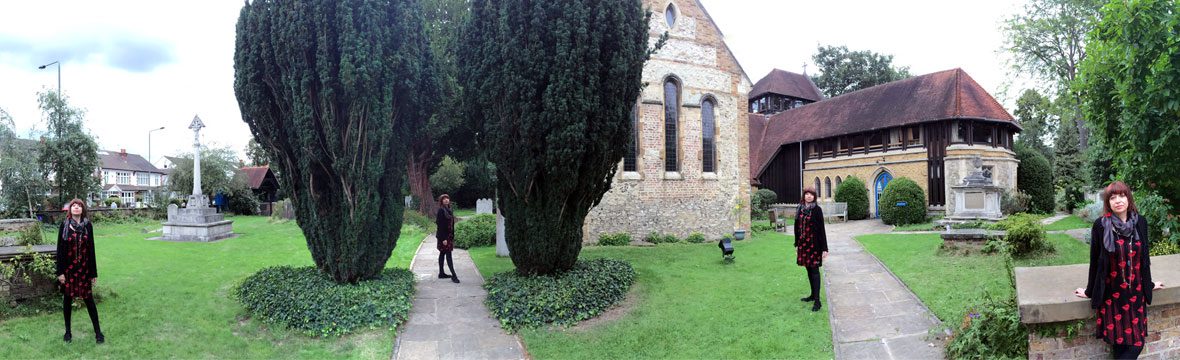

How could I not wish to contribute to Hellebore’s first excursion into the realm of fiction? The magazine continues the tradition of fantastical subject matters from folklore to the supernatural that originated from stories told by candlelight before literacy was widespread. Later these strands, be they of faerie, witchery or superstition were to influence writers such as MR James, Arthur Machen, E. Nesbit, Algernon Blackwood, Edith Wharton and EF Benson. It is without embarrassment that I confess to being old fashioned when it comes to horror/fantasy whether in books or film. Roger Corman’s cinematic vehicles for Vincent Price and Hammer films offer a rich banquet that I’ve never really left, bar one or two exceptions. The first person to introduce me to this dark vein of culture was my grandmother, who talked fondly of Edgar Allan Poe, which if you’d have met her would have seemed extraordinarily out of character. Uncanny tales should always have good manners, at least in my book. Splatter and gore are the slaughterhouses of imagination. As this is my blog, I’m allowed to digress…..
Hellebore’s foray into publishing a literary anthology grew from the tendrils of their guide to ‘Occult Britain and Northern Ireland’ which was issued to acclaim in December 2021. The dark months of the year seem to lean towards such things but it was in the spring of 2025 when I was first contacted by editor Maria J Perez Cuervo, who also founded Hellebore to submit a story based on one of the places in the original ‘Guide’. London’s Highgate Cemetery is not an obscure location but it is one of the most atmospheric that the city has to offer, the poetic equal of Pere – Lachaise in Paris. I had never written about vampires before but the cemetery and more specifically, Swain’s Lane that runs adjacent to it had left an uneasy if memorable impression on me. Seen in daylight, it is a very pretty narrow road, a fence allowing glimpses of the graves and foliage that runs alongside it. The road twists and turns leaving blind-spots but it is easy enough to walk down. Nevertheless, Swain’s Lane left me feeling apprehensive. The fact that it was subtly, even politely creepy only served to make it more unsettling. Despite its beautiful gloom, the cemetery itself felt far less off kilter.
What makes ‘The Highgate Vampire’ particularly compelling is that it is relatively recent and allegedly real. The majority of British vampires tend to be of antiquity, aside from the fiend of Croglin Grange who was allegedly active between 1875-6. Opinions vary as to whether the Croglin Grange vampire was fantasy, folklore or fact. In the case of the ‘Highgate Vampire’ however, there were several eyewitness accounts, the majority of which were reported in the Hampstead and Highgate Express, including one from a Mr. R Docherty who claimed to have seen ‘a tall man in a hat who walks across Swain’s Lane….and just disappears though a wall into the Cemetery.’ (February 13th, 1970) The presence of the supernatural, decades or even centuries later can leave a residual essence like invisible finger prints on a location. That sense of psychic trespass on Swain’s Lane was to stay with me for over a decade until I heard from Maria and then I knew it was time if not to lay it to rest to at least give it an unearthly resonance.
The book itself is a dark treasure, produced to the high quality of design associated with Hellebore magazine, whilst the stories bristle with magic and menace. Contributors include Ramsey Campbell, Steve Duffy, Helen Grant, Verity Holloway, Eoin Murphy, Reggie Oliver, Steve Toase and Ally Wilkes. It’s a pleasure to be included in such a strong line-up of authors, capable of capturing the uncanny evoked by certain locales. For further info, please go to www.helleborebooks.com

 Nina Antonia