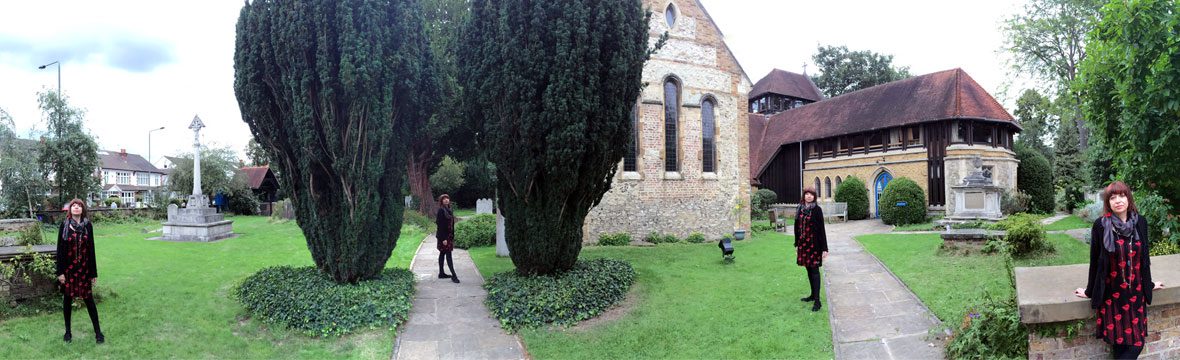
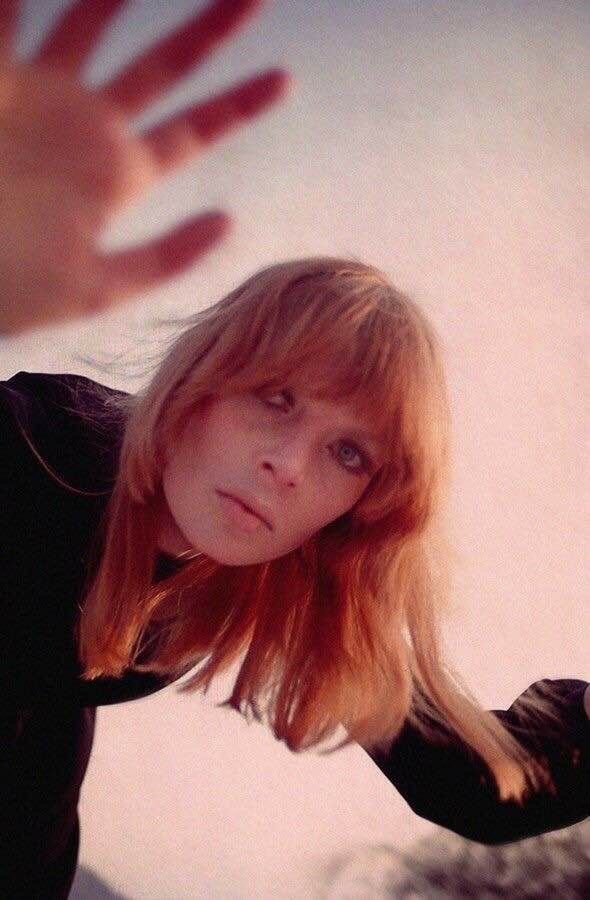
‘Because if you have a Lot, you are not really Free’ – A reflection upon the Nico enigma courtesy of Barbara Wilkin who was her friend & driver. By Nina Antonia. 

Over a decade ago, I began interviewing some of the people who had known Nico whilst she was residing and performing in Manchester, in the latter part of her life, with the hope that I could get a publishing deal. This alas was not to be but the material I collected is more than worthy of sharing. This particular conversation with Barbara Wilkin, who was Nico’s friend and driver, is very poignant and revealing. Nico was enigmatic but without tarnishing her mythology, Barbara Wilkin’s thoughtful account goes some way to explaining it.

In 2024, Hann, the daughter of Barbara Wilkin, released a delightful single entitled ‘My Mum was Nico’s Driver.’

Barbara Wilkin Interview

N: How did you meet Nico?

B: It was in 1982, at a concert in Holland in Apeldoorn. I went with 2 journalist friends who wanted to interview Nico. As it turned out, they never found her but I did. It was a day that changed my life because I wouldn’t have ended up in Manchester if I hadn’t gone to the gig. At the time I was learning to play the drums and I watched Toby (Phillip Toby Tomanov) the drummer throughout the concert, so he came over afterwards and said ‘Why did you look at me that way? I started dropping my drum sticks’. I ended up back- stage; I remember the band, The Blue Orchids, were sitting around a table and at the head of it was Nico. After being introduced, I took a seat. The moment I sat down I felt Nico’s eyes upon me. I found this unsettling and tried to avoid looking back, but risking a few brief glimpses just to be sure. Nico kept looking and she held my stare and looked deeply into my eyes and said in German (translates) ‘You don’t have to be afraid of me; I’m only an old woman.’ I was flabbergasted that she had caught on that I was German. She was scary to be honest, she had scary eyes. That was our introduction. She took an interest in me. When I first came to England, it was to be with Toby the drummer, we were going out. Later when I split up with him, I was working with Alan Wise and became their driver. There were people who didn’t want to travel with Alan or Nico so I drove them. At one point we had two mini-buses going around Europe. It was quite a sexist environment with all these Mancunian guys. When Alan said I should drive and work for him there were certain guys who didn’t like having a girl on tour but Nico and I were the only girls. Sometimes there was a little bit of rivalry over who should do the driving as Nico had been the driver for the Velvet Underground. She kept insisting on how great a driver she was. She’d sit behind me and dig her knees into my back! At one point when were crossing the Alps I stopped on a slope and said ‘okay’ and gave her the car keys. Everyone else deserted us, so it was just Alan and I but when Nico tried to drive, the car kept stalling. She was really upset that she hadn’t been able to pull it off.

N: Nico’s enigma?

B: She didn’t want to be Mainstream. She told me that Patti Smith had given her a pump organ, the one she came to Manchester with had been given to her by Patti Smith. (after Nico’s harmonium had been stolen) I liked Nico for the heavy German stuff that is what I heard first, rather than the Velvet Underground.

N: I’m wondering if there was something about herself that she didn’t understand

B: That might well be the case. If you look at Nico and how she grew up, her mum was mad, she didn’t really know her father. She told me things about him, he looked like Gregory Peck, he was really handsome but he was homosexual which was why the Nazi’s killed him in a concentration camp. I don’t know the historical details, what is written on Wikipedia might not be right. Allegedly his family rejected him (like Ari, like Nico? N) Nico talked about that a lot. We went to see her father’s family in Cologne. They were wealthy people who owned a brewery. She should have got some kind of inheritance from them. In 1985 or 6 we were in Cologne, Nico had a gig there, she pulled out an address and said ‘Let’s go and see these people’ so we went and rang the doorbell. A woman opened the door. When Nico said who she was, the woman slammed the door on her. That was as far as we got. She was upset about it and it wasn’t just for her, she was thinking of Ari as well.

N: It seems that she did try to look out for Ari

B: She told me once that she’d never been as well organised as she had been when she was pregnant with Ari, she was responsible at that time.

N: The majority of the men in Nico’s life seemed to have been quite unsubstantial and ephemeral figures. She never got to bond with her ill-fated father then there were liaisons with Brian Jones, Jim Morrison, Alain Delon…….

B: Men adored her for her looks when she was younger. She talked about men in different ways, she adored Jim Morrison, never said a bad word about him. Alain Delon she had no good words for, she said that he was violent to her. It’s so obvious when you see Ari where his genes came from, but I think she felt upset and betrayed by Delon.

N: The change from light to darkness, an intellectual decision to be taken more seriously as an artist?

B: It might have been a combination of both and also she had red hair when she was with Phillip Garrell, he may have had an influence. She claimed not to have taken drugs before then but she had taken speed. She said that when she was a model she had always been starving, surviving on an apple for breakfast, an egg for lunch. She also claimed that she only had to look at food to gain weight, she was a big woman, and she didn’t eat much at all. Her periods stopped. But why did she change? How old was she? At 16 she became a full time model. I met her aunt at the funeral so she had so many things to say, she cared. I don’t know about her mother, I don’t think she had proper mothering from her own mother. I think her mother was a tortured person, she spent time in a mental institution, she wasn’t around when Nico was a child, and it was her aunt who was the stabilising factor. Her father wasn’t there, Nico told me about how she would hide in the cellar when Berlin was being bombed, she would have been 6 or 7. Obviously she missed out on schooling, she got into modelling early.

N: Where were you based when you were in the UK?

B: Nico stayed in a few place. We lived in Brixton for 7 months; it was a 3 bed flat. Effra Road. She liked to have me around, she’d always ask, when will you be back? We’d watch television together, go to the pub, she was always trying to set me up with people, I was always surprised when she took an interest in worldly things. She would sit back and observe people. She wasn’t isolated in that way. I think she’d given up on love, there were a few guys, I mean she was 42 when I met her, there was a young guy around but she’d lost interest. She didn’t relate well to a lot of women, she related better to males but even then she was alienated by how men treated her, first when she was beautiful, then with the Velvets, when she was a superstar. There would have been a lot of situations for her to deal with.

N: At least by the time she got to Manchester, Alan Wise set up a safe base that she could retire to

B: Alan helped to stabilise her situation. There were drugs here but later he got her onto methadone so she didn’t have the fear of not having any gear. Some of the gigs that Nico did, especially when she was playing her own stuff, some of the audience would be disinterested, they’d talk, I’d get quite angry about it, all they wanted to hear was the Velvet Underground songs, it must have been hard for her, at times she was quite unwell. Also Alan provided her with friendship, even though she was pretty horrible to him at times, she’d kick him and shout at him say that he hadn’t paid her properly but he did what he could, he’d pay the musicians, make sure that Nico had money even if he went without himself. I think she appreciated that, I think she knew. But then again she was stuck in Manchester, and how realistic was that for getting more gigs? She became more settled and thinking what she wanted for herself. She was a very modest person. She didn’t expect much and she didn’t ask for much. I remember once saying to her ‘Nico, all you have is that harmonium and a black bag of clothes’. She said ‘But I like it that way’ ‘Why?’ Because if you have a lot you’re not really free.’ But she wasn’t free from the drugs, not for a while, that was always a worry for her.

N: Nico was quite a rootless being which is reflected in some of her songs. She seems to have been permanently in exile, mentally.

B: She was quite a lonely person. I really like one cover she did. It was a cover of a Hildegard Knef song ‘Lied Vom Einsamen Medchen’ ‘The Song of The Lonely Girl’. The lyrics are about a girl who has a longing and she is lonely and her hair is so blonde, her heart is of stone and her lips are as red as blood. Nico sang it very well. I think it was symbolic of her own situation. On one side, her whole world was a fairy story, celebrities, stars, it’s a place where nobody is themselves, they are images, it’s about how they want to be seen and how they present themselves then she went to the other extremes. She created her shadow side. She never fitted into the so called normal world, she created her own world. She was proud that on her passport it said ‘Ohne Festen Wohnsitz’ which means without a permanent residency. And her life was like that, she didn’t fit in and she knew that.

B: I spoke to my sister yesterday, who was also friends with Nico. My sister told me that in Cologne they decided to name a street after Nico, it was going to be called Christa Paffgen street and then someone threw a spanner in the works by going we can’t call a street after her because she was a drug addict. It was on a television programme. My sister wrote in saying why was this allowed to happen? So many people who don’t really fit into society at the time when they were alive and now streets are being named after them, why not Nico? It would be a nice thing in Cologne to remember her by. I read some Dylan Thomas today can you imagine him without cigarettes and alcohol?

Nico’s Death. (18th July, 1988)

I was very shocked when she died; I always thought she’d outlive all of us. Heroin alone doesn’t kill you and at that time she was getting more positive, rebonding with Ari, and spending time with him. Whenever Ari was going to join us for a tour, she would be so excited. She’d knock at my door ‘Ari’s coming’. She cared as much as she could. She had wanted to look after him in earlier years but circumstances hadn’t allowed it because she was Nico. Maybe it was better for Ari in some ways that he had been taken away from her but anyway, it is terrible to see Ari now and what has happened to him. He had a stroke, a brain haemorrhage, he had the same thing at the same age, 49, as Nico but he was fortunate that he was on the metro. I saw him for the first time since his mother was alive, two weeks ago; he is paralysed now and needs to take a lot of medication. I think if Nico had been found earlier she might have survived but there may have been some physical damage, like Ari. It is tragic. Is there something running in some families, some tragedy passed on to different generations. ? I don’t know what it is. It has been an honour to have known Nico, she changed my life. I got to tour for 7 years. When I was older I met a musician, we became normal, held down normal family jobs but life with Nico was an adventure and it was a privilege to have had those experiences.

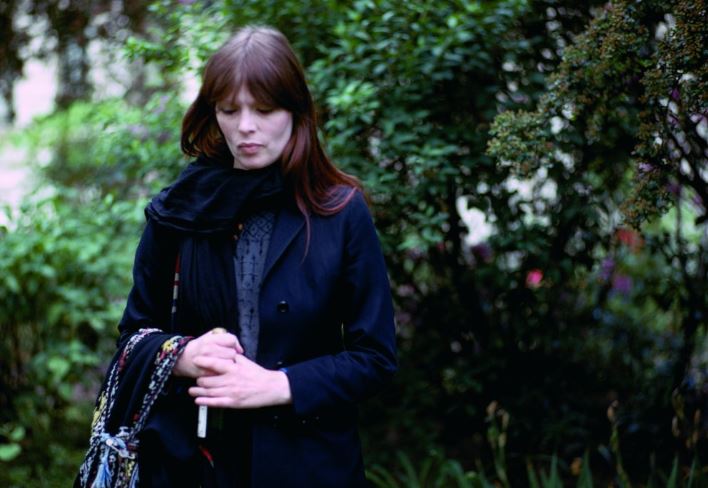
The Last Testament

Nico-and-James-Young-Berlin-Planetarium-(photo-Graham-Dowdall)

Thank you to James for rounding up ‘The Last Testament’ with a picture of him and Nico, taken backstage at the Berlin Planetarium, on June 6th, 1988.

This was Nico’s final concert and probably one of the last photographs, snapped by Graham ‘Dids’ Dowdall, who played percussion in ‘Faction’.

According to James Young: “The worried look on Nico’s face is due to stage fright … we all had it as we were featuring new work. “I think I’m going to have a heart attack,” she said.

With music of so strange a sound,
And beauty of so wild a birth-
Farewell for I have won the Earth‘ (‘Tamarlane’ by Poe)

Nico & The last Testament of Doctor Demetrius

Nico Purple.JPG

(photograph by Danny Fields. Garden of the Portobello Hotel, London)

Monday’s full blue blood moon weaved its strange magic. Few rock tomes stand the test of time but James Young’s ‘Songs They Never Play on the Radio’ will always have a permanent place on the bookshelf. Some thirty years have slipped by since Young played keyboards for Nico, then penned a slender yet mischievous memoir of his adventures touring with the Moon Goddess. Nico always managed to escape the modish, even if she started her career as a model, before Andy Warhol inducted her into the Velvet Underground as their resident chanteuse. Her solitary aura and aloof stance separated her from her more frenetic band-mates. Reincarnating as a solo artist, she morphed into The Moon Goddess, composing haunting dreamscapes on a harmonium.  Art can only survive time’s relentless harvest if it touches upon eternal themes. Nico’s music, a silvered interior wilderness carved out of night and thronged by shadows can never date because it is unclassifiable whilst being Gothic in the manner of Pugin. Some years ago, I interviewed Alan Wise, who pivotal to Manchester’s post punk music resurgence, left his unique imprint on both the Hacienda and Factory Records. However, it was as a Nico aficionado that I sought Wise out. Featured as ‘Doctor Demetrius’ in Young’s tome, Wise managed Nico in the last years of her life, though he was clearly in the thrall of the Moon Goddess as this rare and insightful interview attests. Like Nico, Alan Wise has since gone over the frozen borderline, though I have no doubt he is still in the stately procession of the Moon Goddess.

 Alan Wise Interview

(with some words from Ari, at conclusion)

N: When you first met Nico what where you doing?

A: It was 1981, at the time I was running nights at a club called Rafters and she was booked to play there by Mike Hince who worked for Rough Trade.  He introduced a lot of interesting stuff to us. I didn’t really know who she was and when he made the booking I said, ‘Who is he?’  What happened was I saw her arriving with her boyfriend, Robert, from the Scars, a young Scottish guy. She was carrying her harmonium and I was just going out to get something to eat at the Italian restaurant next door. I liked the look of them, they looked interesting, bohemian. I said ‘Would you like something to eat? Are you hungry?’ Of course they were. We went next door for something to eat.

N: Where her circumstances quite precarious?

A: Yes, very, they were travelling on buses, doing gigs for money, there wasn’t that great a fee, she had a tour of the North to do so I went with her, to look after her. Both she and Robert were hopeless; they had no sense of organisation or the money side of it, and no access to legal supplies methadone.

N: There must have been something about Nico that made you want to be act like this …..to be valiant?

A: I liked her instantly I thought she was a very interesting character. I only got involved in entertainment to meet interesting characters. She was strong but vulnerable, bright, charming. I found her somewhere to live, she’d been touring but she liked Manchester because of the Victorian architecture. Initially she was staying in a Polish hotel in Whalley Range (what do you get for your trouble and pain?) the Polex owned by a war hero, it was very cheap, she didn’t have much money. After that, she came to live in Didsbury with me, only briefly, then she moved to the other side of Manchester, a beautiful area called Prestwich Park (house was called Moresby) it was Victorian.

I remember when Gregory Corso was staying with her, it was funny, they had this banter, they’d watch old films, ‘King Solomon’s Mines’ and Nico would say ‘I wish I had a mine’ and Gregory would respond ‘Sorry Nico, I can’t help you, I haven’t got a mind’ ‘I didn’t say ‘Mind’ Gregory, I said ‘Mine’…’Gregory was with us for about a year, he was sending letters home  to his wife telling her that he ‘Staying with a lovely couple in the Lake District. I said to him ‘You’re hardly staying with a lovely couple in the Lake District’ He said ‘Alan a gentleman doesn’t read someone else’s mail.

N: Did she talk much about the past?

A: All the time, Nico’s life was the past. Berlin, the war, what she’d done, modelling, why she didn’t like it. I spoke to Andrew Loog Oldham about her; he said that when he’d met, she’d been very ‘Harvey Nichol’s’ meaning nice clothes, bright attire, fairly upbeat, what you might consider a ‘Lightweight’ but her personality changed because of her opiate use. She got into that culture.  Had she not got into opiates she may simply have been a light hearted German Folk Singer, as ‘I’m Not Sayin’ suggests. The heavy Marlene Dietrich stance came later. Oldham said her character wasn’t like that at all. She could be moody, but I’d have said it was because of all the drugs she took over the years. Her mood altered every few seconds but she could talk and be charming and witty. She said what she did and got on with it. She was one of the last Left Bank Bohemians. She read good books, although she hadn’t had a formal education in the sense that she hadn’t gone to university, which she regretted and said was because of the war, she always read good books. Dostoyevsky, Solzyenitschen? (Gulag Archipelago) quality English writers. She liked being solitary but she’d also socialise but she wasn’t a snob, she’d hang out at the local pool hall, strike up a conversation with a bum.

N: What happened to her harmonium?

A: Ari, (Nico’s son) took it back to Paris but his girlfriend sold it; it was here for a long time.

N: Ari is staying with you? What kind of a relationship is it?

A: Depressing (laughs) It’s not a permanent thing, he was poorly in France so I’m looking after him. Ari’s memoirs were very well received in France. He’s decided he’d like to get it released in England if he can get a translator. He’d love a deal for it in the UK. He can’t remember what he signed for with the French publisher, in that respect he’s just like his mother. We’re not friends, were family, I’ve known him for so long. His mum was family to me, and so is Ari, it’s a family affair. I remember some Dutch promoters came to see us, they said ‘Not only do you work together, you live in the same house.’ Our working relationship wasn’t business, it was family, we didn’t have a proper contract, we fought and made up like family.

N: Is James Young’s book a true reflection?

A: No but it’s comical, I helped him write it. We decided to write a funny book that was a bit like our experiences, but the publisher didn’t want it done like that and the only way they were going to pay an advance was to finish the book as a biography but it’s not an accurate account. Life was much more comical than that and she did very nice venues, you can’t tell me that the Palais De Beaux Arts and some of the Italian theatres we played were dumps. James portrayed the down side of pop life because it was attractive, of course it was representative of certain aspects, but it ignored an awful lot of other things.

N: Any truth to the story that Nico wanted to be a florist?

A: That was towards the end, she wanted to work in a flower shop until she found out the wages. She went to a florists to ask how much they paid. They told her £150, she said ‘I can’t live on a £150 a day’. They said no, it’s £150 a week. It was a local place, she’d worked in a florists before and she liked flowers.

N: Marriage proposal from a Hassidic admirer?

A: That was really comical, he was about a 110. He owned the house she lived in. What she used to do was the light the fires for him on a Saturday. Jewish law states that one shouldn’t do any work on a Saturday, so they invite non-Jewish people in. Incredible as it sounds she volunteered to light the fires for him and put the oven on. She’d done this as a child. But he asked her to marry him. She seemed to think it was serious.

One time she was in hospital, she had septicaemia, it was 1983. The hospital was in Crumsall. She would dominate the ward by turning the television over when ‘Coronation Street’ came on. She put on intellectual, educational programmes that no one else wanted to see. When I went to see her, she gave me the run down on the ward ‘That women there, she is such a moron she watches rubbish on TV’ ‘This one reads a terrible paper’ ‘That one over there, her husband is always very noisy’ but then she pointed to the women in the bed next to her ‘And this one sleeps with a tiger’ ‘You what’? ‘Or maybe I’m imagining it’ She didn’t know but the fact that this woman was sleeping with a tiger seemed perfectly acceptable to Nico. I remember when she used to do TV interviews, she’d be asked a question, like ‘Would you like a car?’ then they’d go on to another subject, say for instance ‘Rome’ but she’d still be responding to the car question, while they were on to ‘Rome being an ancient civilisation’ She’d say ‘About 2000 years’ and of course it would sound like she’d asked for a 2000 year old car. The conversation she was carrying on in her head was 15 minutes behind everyone else. Looking back, I think she has more talent now that I did then. She wasn’t a rock singer, her strongest work was her own, ‘The End’ ‘Marble Index’’ she was really an avant -garde torch singer in the Dietrich tradition. Her songs were sort of folky, fairy tale, following a Germanic tradition. At the time she wasn’t liked in Germany but now she’s considered a star there. She didn’t like playing Germany, she found it boring and the promoters always wanted to stick to time, they were always so dramatic. She wasn’t rock n’ roll. She did one programme and she said, ‘I don’t know anything about rock and roll; I don’t know why you are asking me.” She was more interested in classical music. She liked modern classical composers, she like Max Bruch, but the greatest one for her was Mahler, the greatest piece of music for her was Mahler’s 5th symphony. She liked the Velvet Underground, Lou Reed and The Doors. One time we were travelling across the Alps and she took over from me, then after a little while she said, ‘I can see Jim’s face in the road’ The rest of us said’ what about the fucking road Nico, we’re getting out’ the whole group got out and waited by the side of the mountain rather than travel with her. She carried on with Barbara, her faithful companion, driving.

N: The way you describe Nico it’s almost as if she lived in a hallucinogenic fairy story

A: She lived like her act, there was no separate persona to the person you saw on stage to the one at home except she wanted to change her name back to Christa Paffgen, she said I’m not Nico, I’m Christa, Nico was a photographer who gave me that name. She was getting a bit tired of the Nico persona.

N: Do you think Manchester afforded her some shelter from that?

A: We lived in Manchester and in London, 29 Effra Road; it was me, Nico and John Cooper Clarke.

N: Did you set up the Martin Hannet sessions?

A: Yes, he was a friend of mine, it was called ‘Procession’ it was a long time since then, we only made one studio album and one live album, which sold a lot. One was ‘Camera Obscura’ which came out on Beggars Banquet, produced by John Cale with the Faction which was James Young, Graham Dowdall & Mike Hinc.

N: You helped her get a script that must have made things easier for her?

A: Yes, she had a doctor who prescribed her methadone

N: The letter?

A: That was a weird occurrence, we went back to her hold out with a BBC camera crew, this was a few months ago, we returned to the house on Prestwich Park South,’ Moresby’ it’s called. It’s a big Victorian house; Nico lived in the upper part of the house, the new owner restored into one about 20 years ago. When she saw the BBC crew, the owner came down. She said, ‘You must have come about Nico; she left her room in a mess’. I said to her ‘Do you mean to tell me you haven’t tidied it up in all that time?’ ‘No, I left it the same but I found a letter’. Unfortunately, the BBC crew nicked it but it was written by Nico to Alain Delon asking him to look after Ari. It was never sent.

N: She must have had some sort of premonition. Ibiza was just meant to be a holiday?

A: Yes, she did her last show in Berlin, they always say that where you do your last show is your hometown and then she went to Ibiza. Ari was with her. She went cycling on a hot day and had a stroke; it wasn’t the fall off the bicycle that killed her. It was the stroke. The last person to see her, by a strange twist, was Peter Hook from New Order. New Order where on their way to the airport and they saw her at a café and waved and she waved back. Very strange.

N: How best would you guide me to write about Nico?

A: You have to go back to her origins, Germany, the war, Berlin.

N: Dick Witts claimed she had a tortured relationship with her mother.

A: She loved her mother very much, sometimes she was unwell but she loved her. Dick Witts claimed to have known Nico well, but he only met her once, she went to his flat but she was uncertain as to whether she wanted him as a biographer.

Nico Cig.JPG

Ari: ‘I have only good memories of my mother. She was a very funny character she had a great sense of humour. She loved me very much, we had a special relationship. It was unique, almost like man and wife, although nothing incestuous, although people sometimes thought we were married. We had an artistic relationship, she was a great lady and I miss her very much. I was with her when she died. To me she was just my mother, a great woman who always tried to protect me.’